How repetition strengthens neural connections
“The biological secret to fluency: Turning dirt paths into superhighways.”

Imagine you are standing at the edge of a dense, overgrown forest. You need to get to the other side. The first time you push through the bushes, it’s exhausting work. You have to fight every branch, and once you pass, the grass just springs back up. If you look back, you can barely see where you walked.
In your brain, learning a new word like the German „Gerechtigkeit“ (justice) is exactly like that first walk through the forest.
But what happens if you walk that same path every day? The grass stays down. The rocks are moved. Eventually, that struggle becomes a dirt path, then a paved road, and finally a superhighway.
The Science: "Neurons that fire together, wire together"
This isn’t just a metaphor. It is a biological process called Long-Term Potentiation (LTP). Your brain is made of billions of neurons that talk to each other via electrical signals.
When you hear a new word for the first time, a signal jumps across a gap (a synapse) from one neuron to another. As explained by Harvard University, the more often that signal jumps, the stronger the connection becomes.
Think of it as a physical bridge. The first time you learn a word, the bridge is made of a single thin rope. Every time you repeat and recall that word, you add another cable. Eventually, you have a massive steel bridge that can handle heavy traffic without any effort.
Myelin: The Brain’s High-Speed Insulation
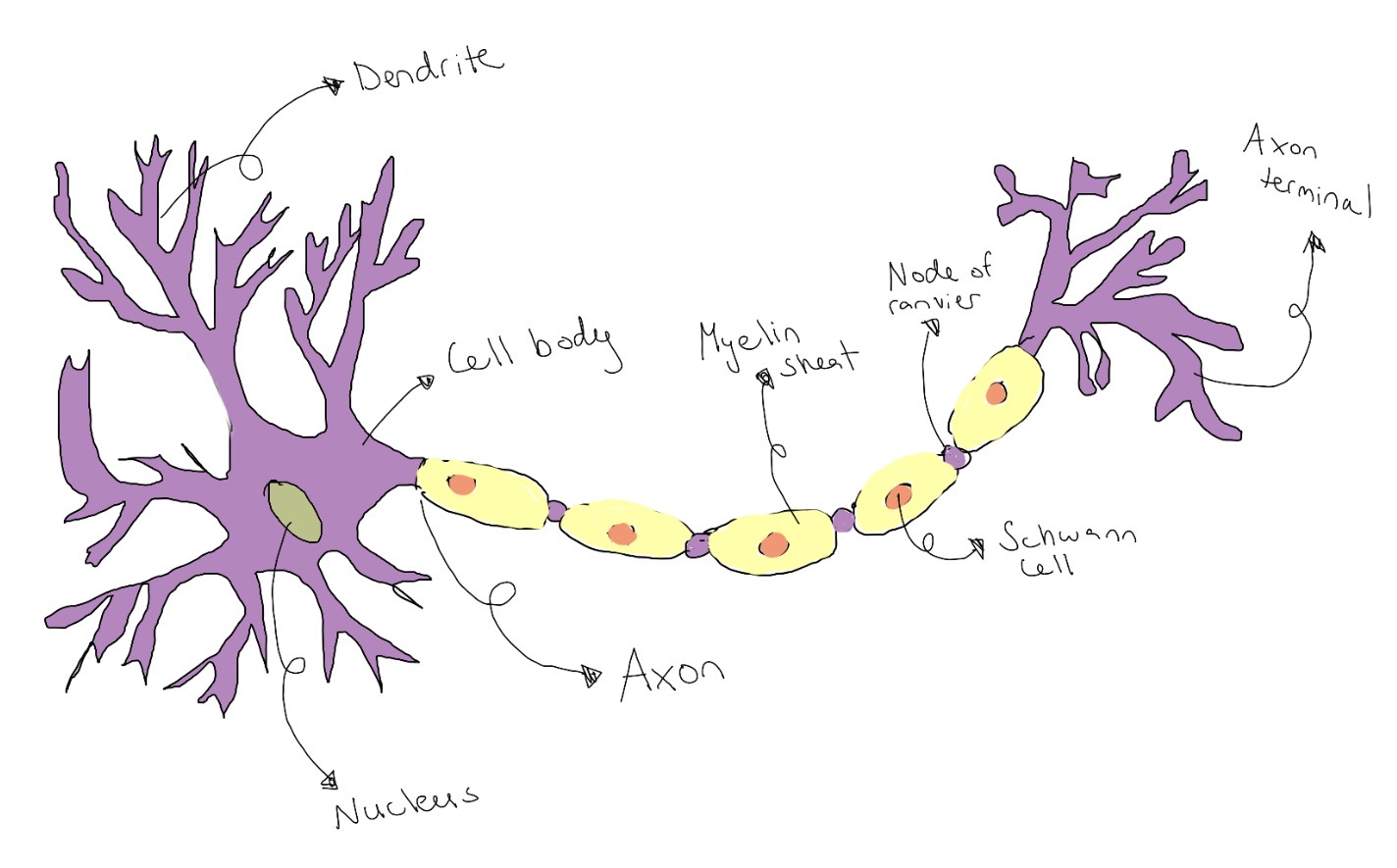
There is a specific substance in your brain that makes this happen: Myelin.
Myelin is a fatty layer that wraps around your neural pathways like the rubber insulation on an electrical wire. According to research from the National Institutes of Health, every time you practice a language, your brain adds more layers of myelin to those specific circuits.
- Unmyelinated path: The signal moves slowly and can leak out. This is why you "ummm" and "ahhh" when trying to remember a word.
- Myelinated path: The signal moves up to 100 times faster. This is what "fluency" feels like. The word is on the tip of your tongue before you even think about it.
Why "Smart" Repetition is Key
You might think this means you should just repeat a word 1,000 times in a row. But as Cambridge University research suggests, your brain is efficient, it stops paying attention to boring, constant repetition.
To build the thickest layers of Myelin, you need spaced intervals. Your brain needs to almost forget the path so that when you walk it again, it "shouts" to the system: "Hey, this path is important! Add more insulation!"
How Vocabuo builds your superhighways
This biological reality is why "cramming" feels so bad and "spacing" feels so good. Apps like Vocabuo are designed to be your brain’s "Construction Manager."
- It identifies which "forest paths" are still weak and overgrown.
- It sends you back down those paths exactly when the Myelin layers are ready to be strengthened.
- It ensures you aren’t wasting energy on "highways" you’ve already built, focusing your effort where the "construction" is most needed.
The Verdict
Fluency isn’t a gift; it’s a physical structure in your brain. You are literally a brain-builder. Every time you open your app and recall a phrase, you are laying down another layer of Myelin. You are turning those slow, frustrating thoughts into high-speed neural reflexes. So don’t just study. Build it, one rep at a time.
Sources & References:

 Learn English
 Learn Spanish
 Learn French
 Learn German
 Learn Italian
 Learn SwedishLearn SmarterSpaced RepetitionReviews timed to land right before you would forget, so words stick for good.Word ListsLearn exactly the vocabulary you need, from CEFR lists to songs and books.Learn from ContentTurn the books, articles and videos you love into vocabulary lessons.CEFR LevelsA1 to C2 explained, and how to learn the right vocabulary for yours.