Learning new vocabulary is one of the most important parts of learning a language. We've all been there: you spend an hour cramming a list of 50 new words, only to realize two days later that the only thing you can remember is "thank you" and "one beer please".
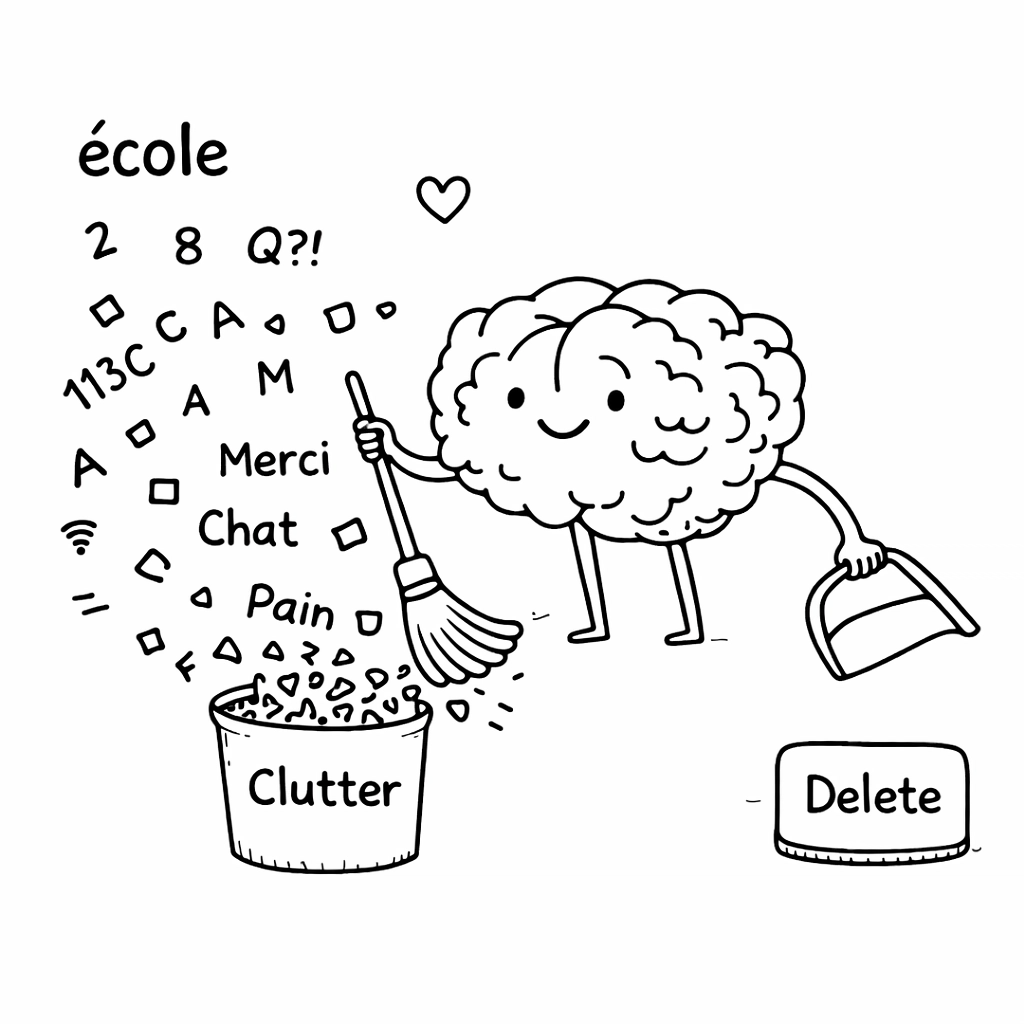
It can be very frustrating, so let us give you a peace of mind: it's not a "you" problem, it's science! Your brain is actually designed to forget, it's a survival mechanism to keep our mental hard drives from cluttering. So when it comes to learning a new language, we need to know how to bypass that "delete" button.
By really understanding the cognitive science of memory, we can move away from "brute force" memorization and toward a system that works with your biology, with your actual brain. So here is how to memorize vocabulary fast, according to science.
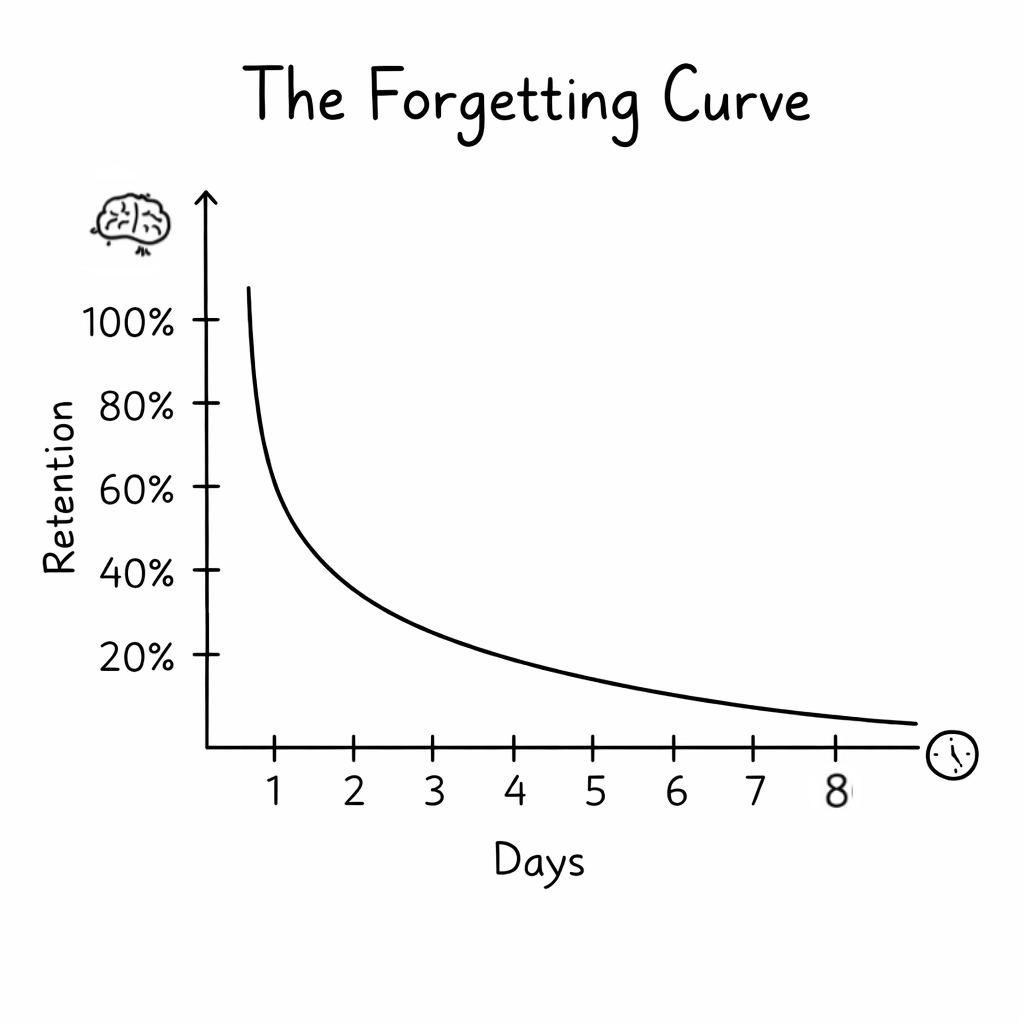
We dove deeper into this topic in previous article, so just to summarise: Psychologist Hermann Ebbinghaus discovered the Forgetting curve in the late 19th century. He found out that without reinforcement (repetition), humans lose roughly 70% of new information within 24 hours. If you aren't actively using a system to interrupt this curve, your study time is like a strainer. We need to plug all the holes to make our effort worth it and here is how.
By far the most effective way to solidify a memory is to be tested on it right before you are about to forget it. This is known as the Spaced repetition system (SRS). Instead of seeing a word ten times in one hour, you see it only once today, once in two days, once in a week and so on. Each time you recall the word, the neural pathway becomes stronger and the forgetting happens more slowly.
Reading a list of words feels easy. It's called passive learning and that's exactly why it doesn't work. Active recall however, is the process of forcing your brain to retrieve a piece of information or a certain word from your memory. When you use a flashcard and ask yourself "How do I say papaya in Spanish?" before flipping it over and trying to remember on your own, you are creating a "retrieval cue". Science shows that the harder your brain has to work to find the answer, the more permanent the memory later becomes.
Unfortunately, our brains don't store vocabulary like a dictionary. It stores them like a web. To remember a word fast, you ideally need to "hook" it to things you already know. What does that mean in practice?
Don't learn that Manzana = Apple. Try Veo un gusano en esa manzana = I see a worm in that apple.
By learning in short phrases or even using mnemonics (mental images), you provide your brain with more surface area to grab onto.
While paper flashcards are a classic tool, they can sometimes lack the precision required for true Spaced repetition. In this day and age you can perfectly optimize your learning by using an algorithm that calculates exactly when your "Forgetting curve" is about to dip.
This is one of the many reasons Vocabuo was created. Our app utilizes a science based SRS algorithm to curate your daily practice. It identifies the words you struggle with and surfaces them at the perfect moment, ensuring you spend less time reviewing what you already know very well and more time mastering what you don't. It's available in App Store and Google Play!
If you really want to speed up your vocabulary acquisition, try following this scientific protocol:
Memorizing words does not require a genius brain. It requires the right system that works for you.
https://www.eng.auburn.edu/current-students/documents/forgetting-curve.pdf
https://www.bcu.ac.uk/exams-and-revision/best-ways-to-revise/active-recall
