If you’ve ever finished a Duolingo lesson without losing a single heart and felt so good about yourself, but then couldn’t remember a single relevant word when using the language in real life - you are definitely not alone.
You’re not doing anything wrong! The problem is not you. It’s what the app was built to optimise for.
Duolingo is brilliant at keeping you coming back, however, it is not as good at making sure you actually remember anything when you close it. And for millions of learners who have started questioning whether their daily streak is doing what they hoped for, that distinction matters more and more.
If you’re done with gamification as a substitute for progress and want to know what actually works instead, keep reading.
Duolingo is the most downloaded language app in the world. Everybody knows it’s fun, you can choose from many languages and for absolute beginners who need a low-pressure way to build a daily habit, it genuinely delivers.
But in 2025, something shifted. Duolingo’s CEO publicly announced that the company was going “AI-first”, which essentially means replacing human content creators with AI-generated lessons and therefore deprioritising quality in favour of volume.
The backlash was significant. Longtime users cancelled their subscriptions, App store reviews went from okay to critical and forums filled up with a question that had been building for years anyway: is Duolingo actually making me fluent, or just keeping me busy?
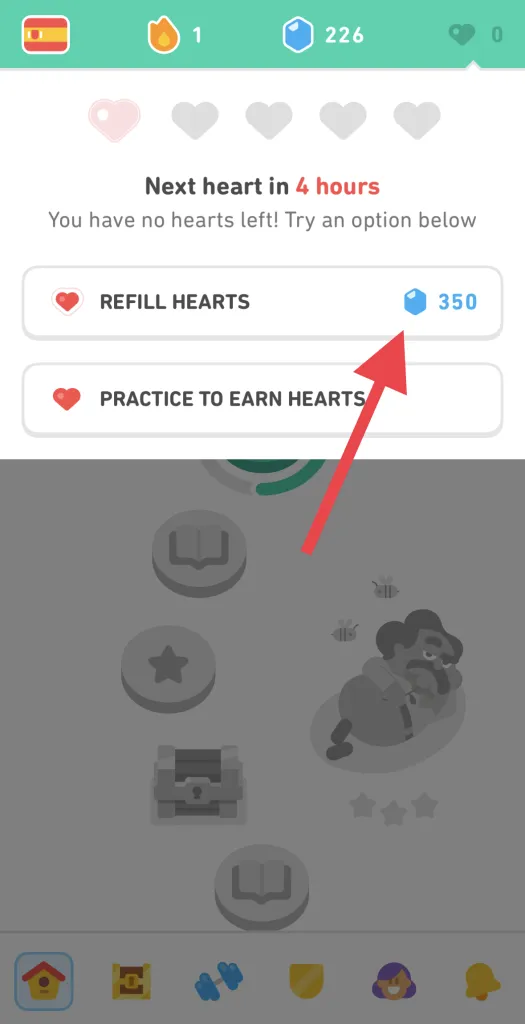
The honest answer, backed by how the app is designed, is that Duolingo optimises for daily active users, not learning outcomes. Hearts, leaderboards, streaks, rewards… All those are engagement mechanics. They are definitely effective at getting you to open the app and practice at least a little bit, but they are less effective at making sure the vocabulary successfully moves from your short-term into your long-term memory, which is the only place that really matters when you’re standing face-to-face with a real person who just said something you need to understand.
So before you start searching for other apps, it helps to understand what your brain actually needs in order to retain a word long-term.
Your brain is not a hard drive that stores information by exposing it to you once and filing it away. It stores information based on how hard it had to work to retrieve it and how often it was asked to do so at exactly the right moment.
There are two mechanisms that work above everything else:
Active recall means you’re shown a prompt (an image, a sentence with a gap, a translation), and having to produce the answer from memory without seeing it. It might not seem so, but this is fundamentally different than seeing a word and tapping “I knew that”. Your brain’s effort of retrieval is the learning. Passive recognition feels good, but it does very little for long-term retention.
Spaced repetition means being shown a word again at the exact moment you are about to forget it. Not at a fixed schedule, not randomly, but based on how your brain has performed on that specific word in the past. A word you always remember should be shown less often than the word you can’t ever remember. The algorithm should adapt to you personally, not to a generic timetable.
These two mechanisms together are the most efficient vocabulary learning methods known to cognitive science. And these are not new ideas either, the research behind spaced repetition dates back to the 1880s and has been validated repeatedly ever since. The only thing that changed is that now, modern software can implement it in a way that feels seamless, rather than studying from a textbook. You can read more about why and how spaced repetition works right here.
In today’s oversaturated market, you have many options to choose from. However, not all the alternatives are the same. Here are a few simple questions you should ask yourself if you’re serious about learning a language:
Does the app use genuine spaced repetition? Not just a “review mode” that shows you words at random, but a real SRS algorithm that tracks your performance per word and schedules the next review based on real memory science.
Does it force active recall? You should be producing answers on your own, not just recognising them. If you can pass a review by clicking on the option that looks most familiar without actually knowing the answer, the app is not actually testing recall. It is testing pattern recognition.
Can you study what you actually need? Generic vocabulary lists are useful for beginners, but once you reach intermediate level, you should be learning vocabulary from the content you consume: books, articles, YouTube videos, podcasts, series… Because that is the vocabulary you will actually encounter in real life.
Does it scale with you? Many apps are built for beginners and plateau around A2-B1 level. A serious language learning tool should take you from absolute beginner all the way to C2, with official CEFR-aligned wordlists and enough content depth to support even the most advanced of learners.
Is it built for language learners specifically? General flashcard apps like Anki definitely can implement spaced repetition, but they require significant setup, technical knowledge and quite a bit of time spent on just preparation. A good Duolingo alternative should feel like it was built with intention, for vocabulary in a specific language with native audio, example sentences, good enough explanations, translation support and a clean interface that makes using the app feel like a walk in the park.
Vocabuo was built around a single conviction: that the goal of a language app shouldn’t be only to keep you coming back, but to get words from the app into your long-term memory as efficiently as possible. Every single feature in the product was implemented with this conviction in mind.
Vocabuo uses a genuine SRS algorithm that tracks your performance on every individual word. It knows which words you always get right, which ones you hesitate on and which ones you consistently get wrong. It schedules your next review of each word at precisely the right moment - not too soon (which wastes your time) and not too late (which means you have already forgotten it). Over time, words that are fully learned stop appearing, and your sessions focus entirely on what your memory actually needs. That’s the algorithm doing the work so you don’t have to.
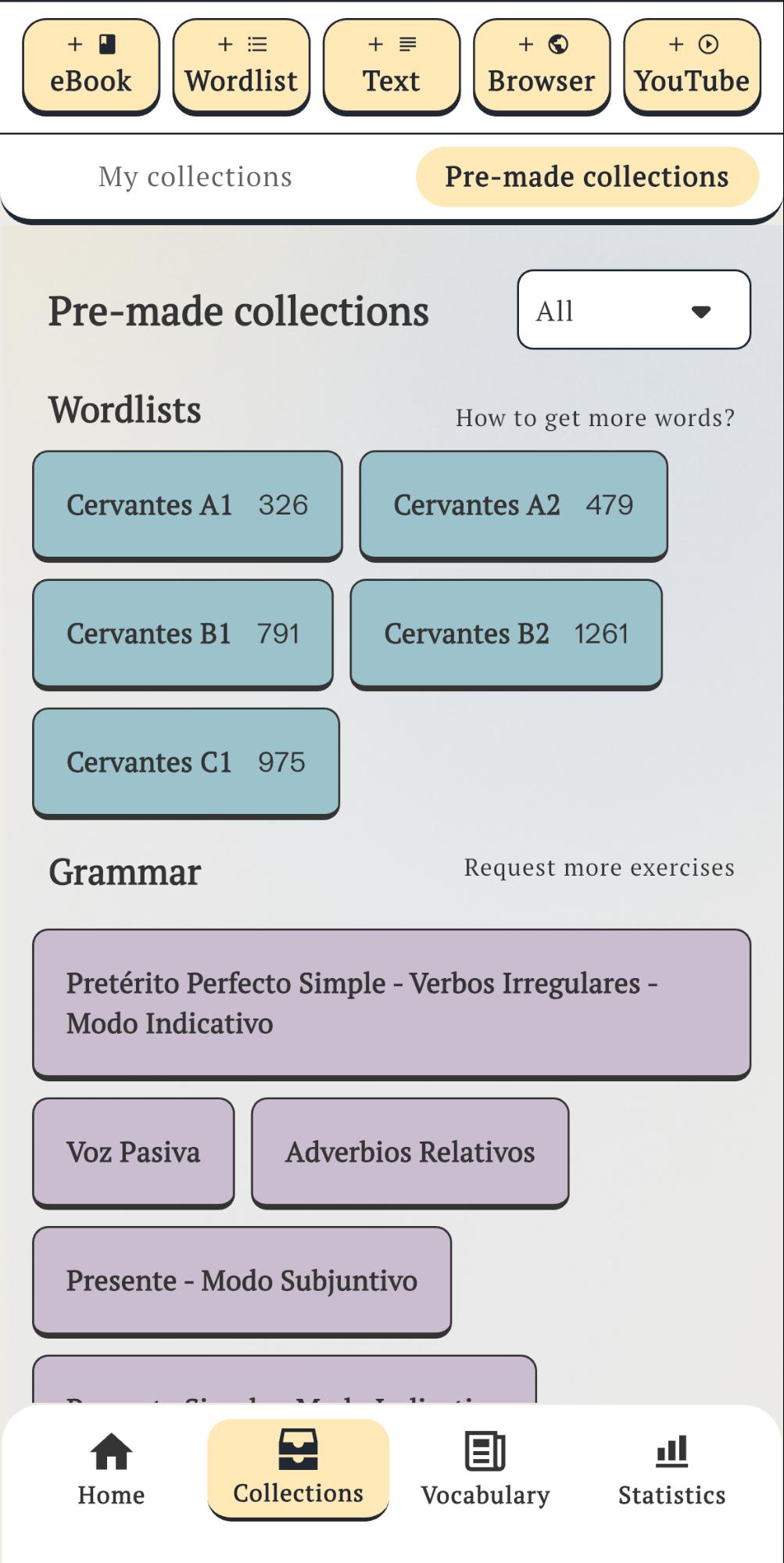
One of Vocabuo’s most powerful features - and one that only very few apps offer - is the ability to import vocabulary directly from the content you consume every day.
Reading an article in your target language and encounter a word you don’t know? Add it to your Vocabuo deck in just a few seconds using the built-in web reader. Watching a YouTube video in Spanish? The YouTube player integration lets you capture words from the video’s subtitles and send them straight to your spaced repetition queue. Working through an eBook in French? The eBook importer does the same thing.
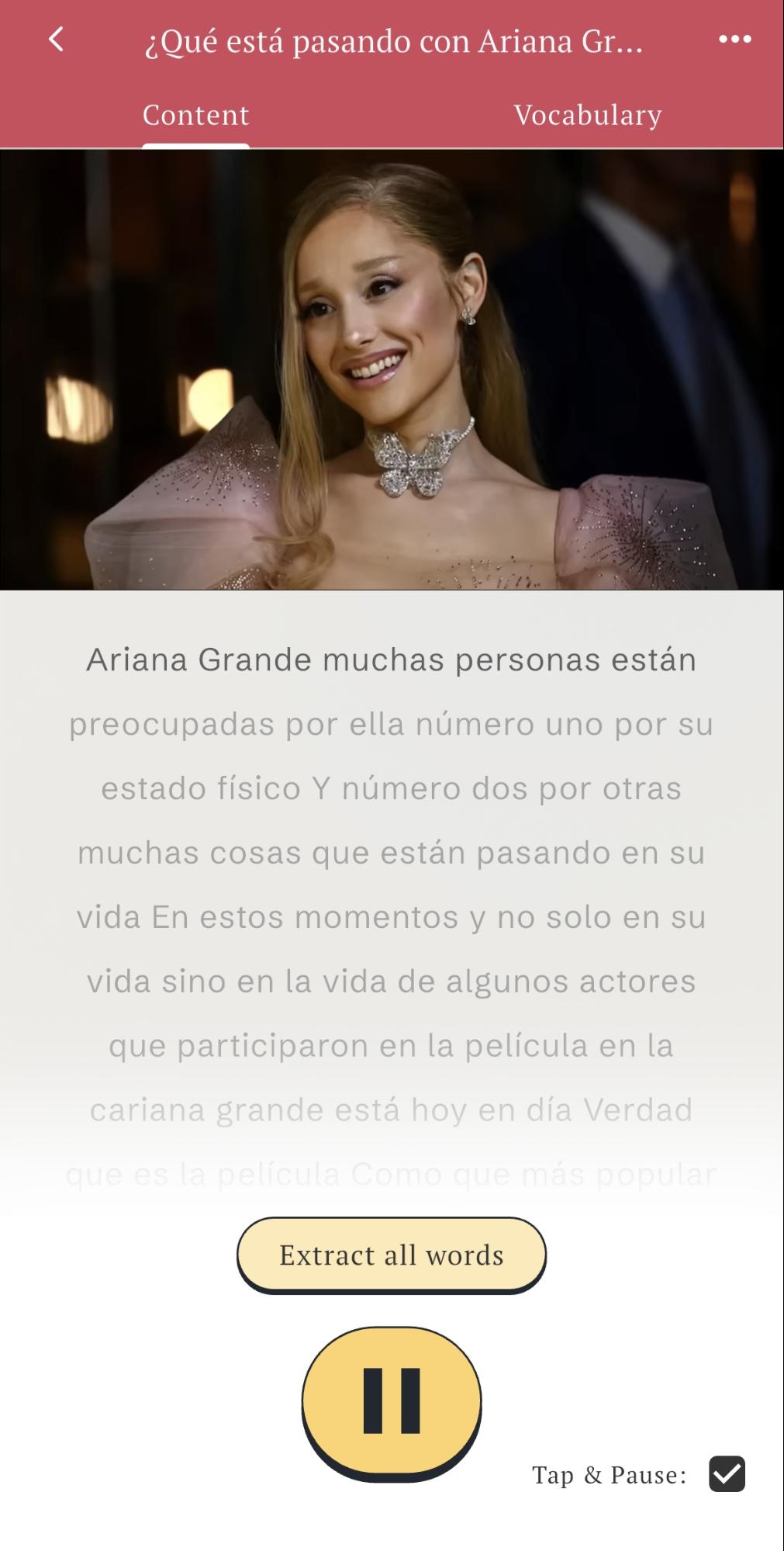
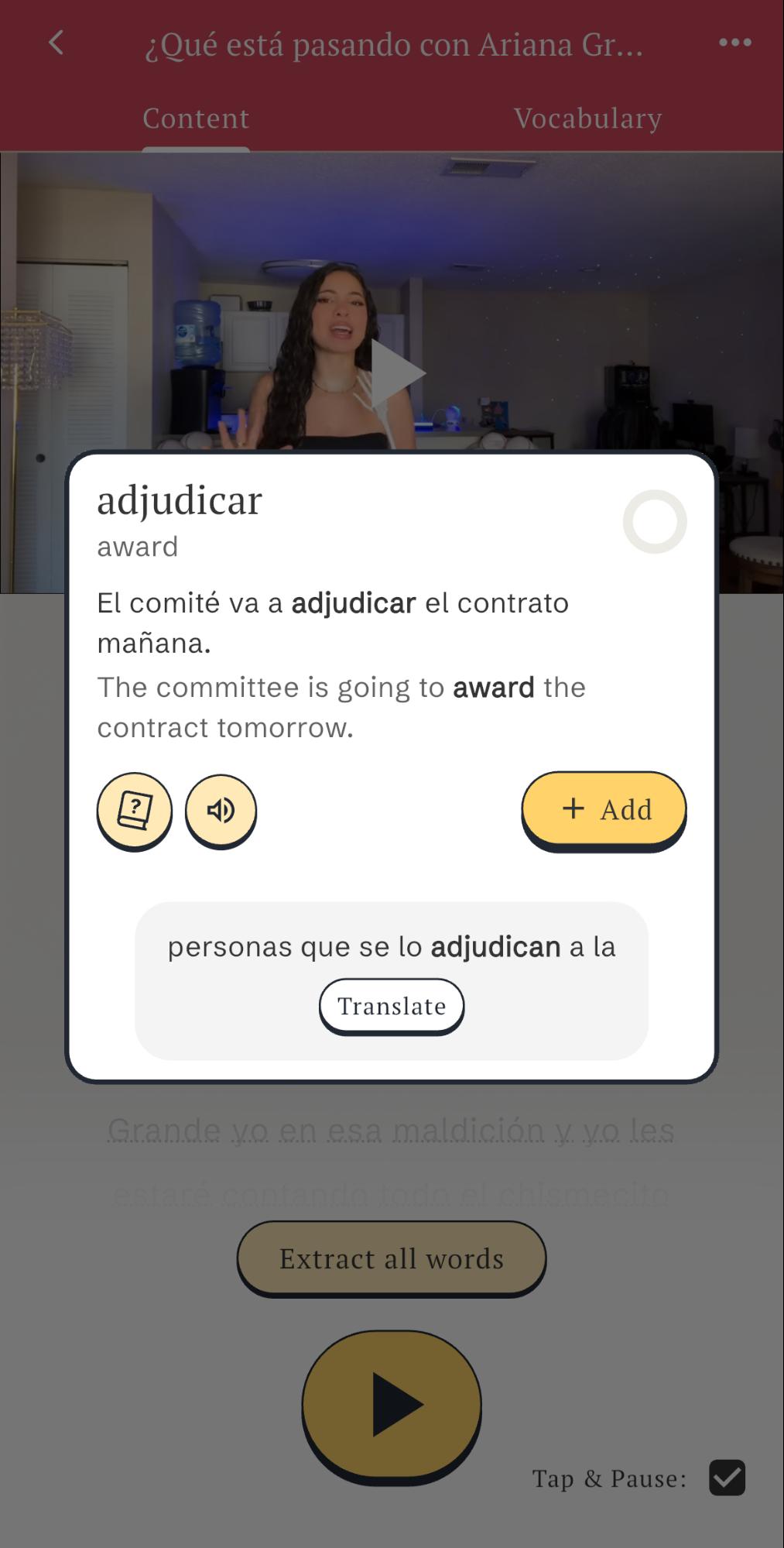
This transforms Vocabuo from a standalone study tool into something embedded into your entire language-learning life. The vocabulary you study is no longer generic. It is now the exact vocabulary you are encountering in the real content that motivates you to learn in the first place. That context makes words far easier to remember, because your brain already has a hook for them!
Rather than curating its own vocabulary from scratch, Vocabuo is built on official CEFR wordlists - the same standardised vocabulary framework used by language exams, universities and professional certifications across Europe and beyond. If you are learning English, Spanish, German, French, Italian or Swedish and therefore preparing for CAE/CPE, DELE, the Goethe-Zertifikat, DELF/DALF, CILF/CELI or Swedex, you are working through the words that linguists and educators have determined you actually need at each level, in the right order, with a clear path from complete beginner to advanced fluency.
This matters because one of the most common mistakes learners make is studying the wrong words. Knowing 300 words that happen to be interesting is less useful than knowing the 300 words that appear most frequently in real communication at your level. CEFR wordlists give you that efficiency without the guesswork.
While many apps use AI purely as a content generation shortcut, Vocabuo’s AI tutor is built to be there for the learner. When you encounter a word you don’t understand, whether there is a difference in meaning or why it works in one sentence and not the other, you can simply ask and get a genuine explanation tailored to your level and your target language. This is the kind of support that used to require hours of searching dictionaries and grammar forums.
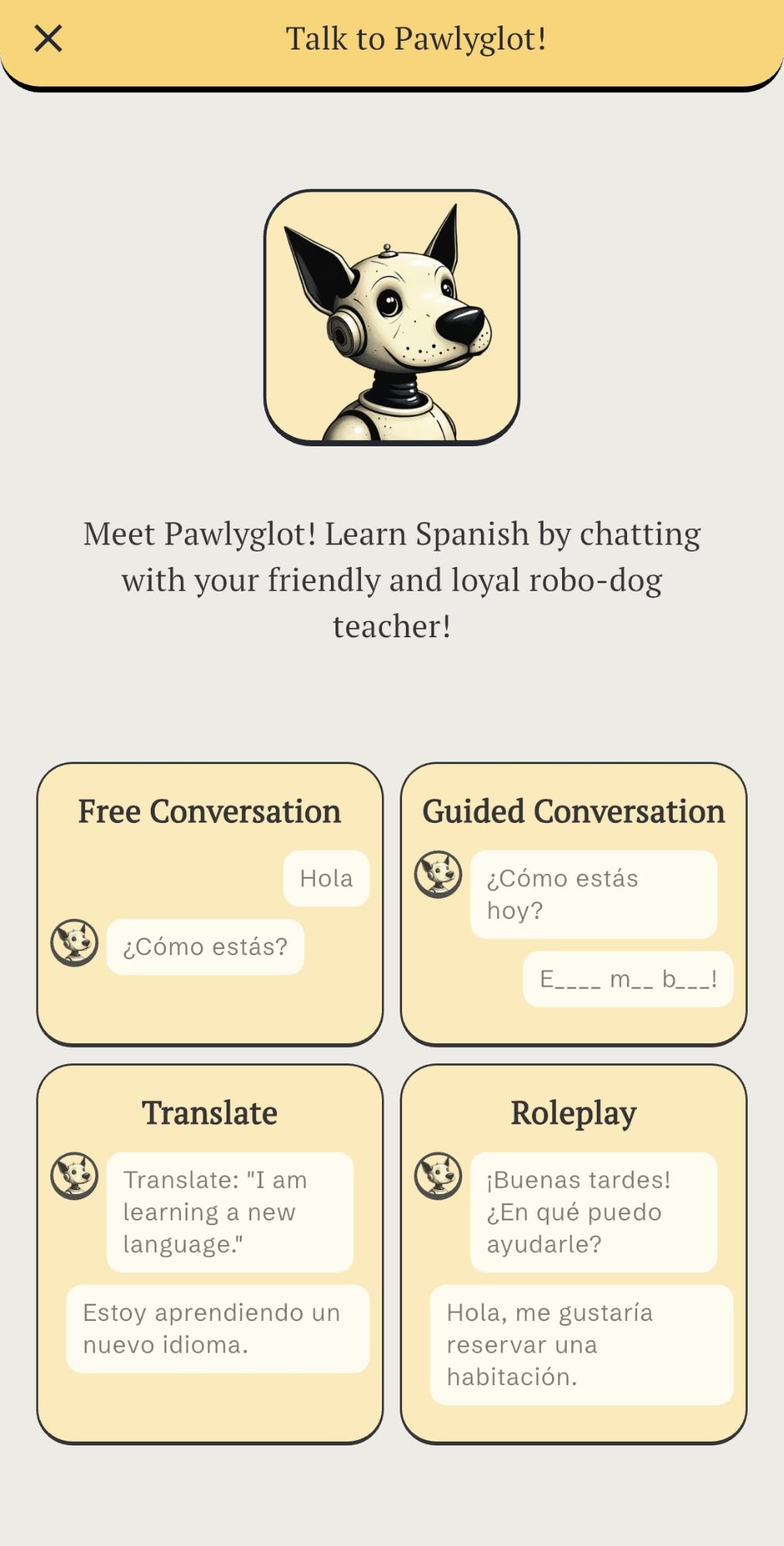
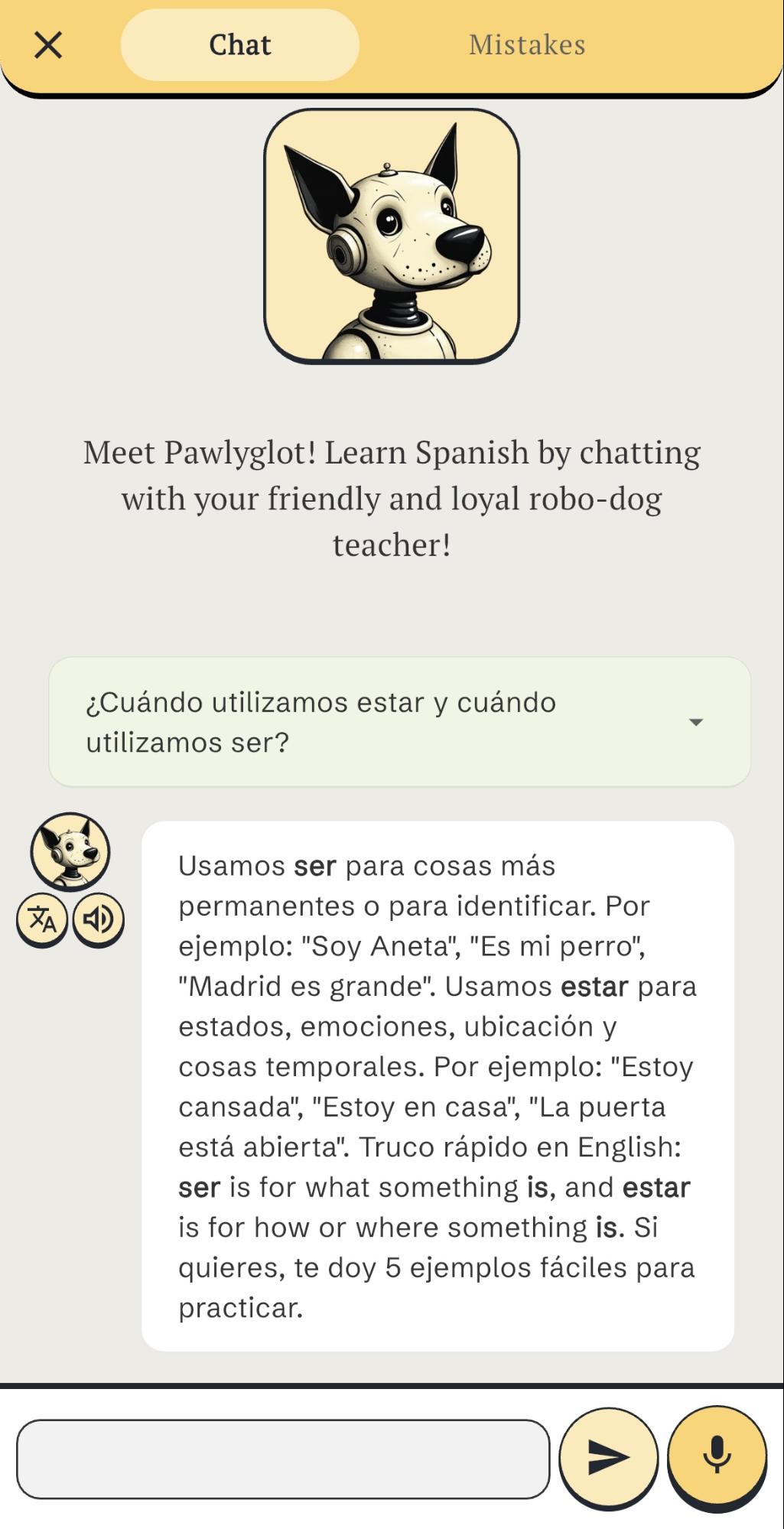
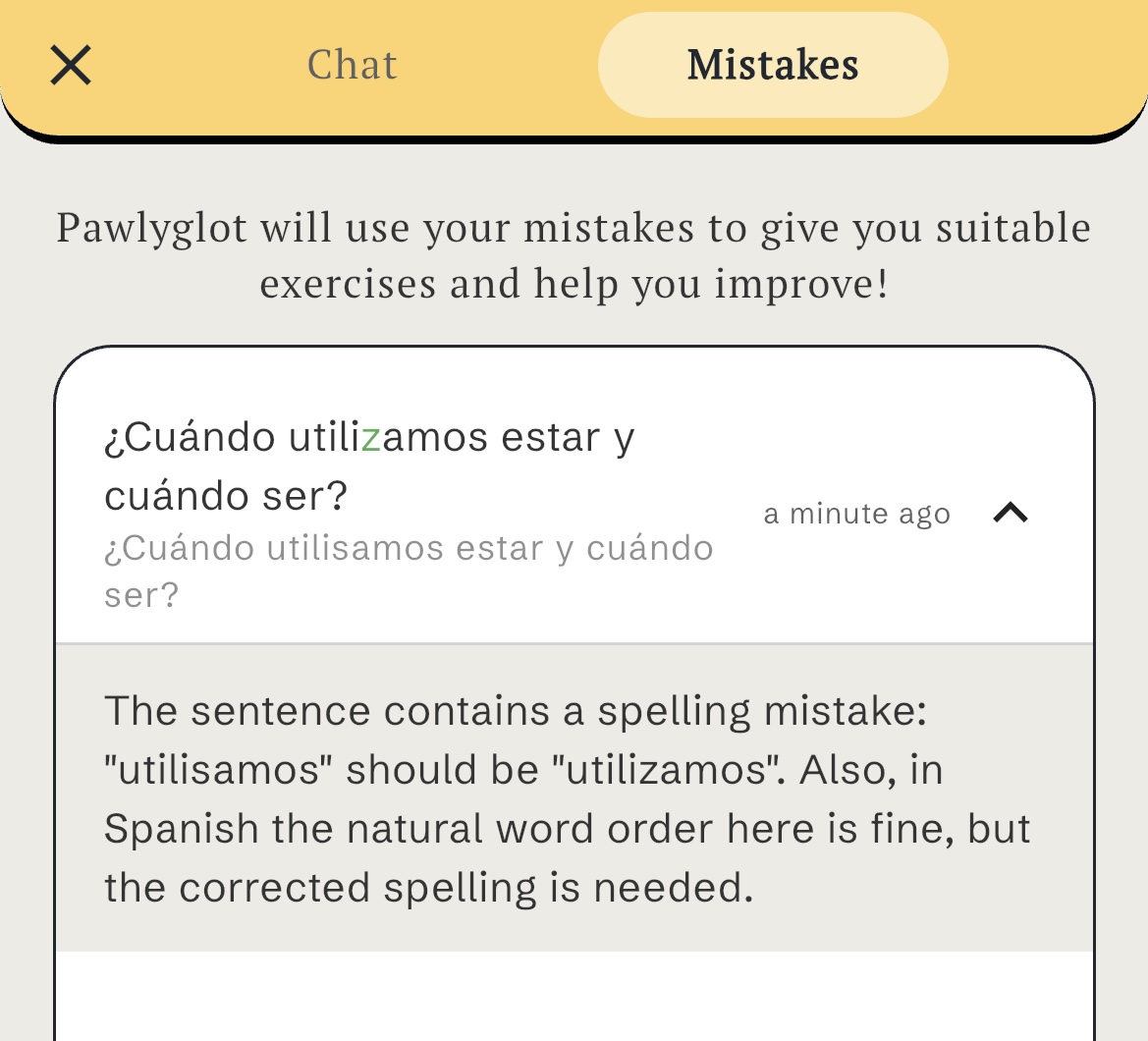
Pawlyglot, your AI tutor, is also paying attention to your spelling and grammar mistakes while interacting with him, so that you truly learn as much as possible without needing to open a dictionary or another app. You will know immediately if you made a mistake or not, because your message will appear in red or green. The explanation is visible in real time and you can review your mistakes later after clicking on the “Mistakes” part of your chat with Pawlyglot.
Although there is a streak counter, Vocabuo will not punish you with a 20-minute lesson after not being able to practice for multiple days in a row. It doesn’t take away your hearts and hard-earned diamonds when you make a mistake. It doesn’t give you experience points or put you in a competitive leaderboard against strangers.
What it does have is a clear picture of your vocabulary progress: how many words you know at each CEFR level, how many are in active review and how many have been fully learned. Progress is measured in words retained, not minutes logged, because that is the only metric that actually matters if your goal is to speak the language fluently, rather than maintain a habit tracker.
| Feature | Duolingo | Vocabuo |
|---|---|---|
| Core method | Gamified repetition | Spaced repetition (SRS) |
| Active recall | Partial (multiple choice heavy) | Yes (production-focused) |
| Vocabulary source | App-curated lists | CEFR official + your own content |
| Import from YouTube/eBooks | No | Yes |
| AI tutor | Limited | Yes, explanation-focused |
| CEFR levels | Up to B1 in depth | A1 through C2 |
| Streaks/gamification | Central to the experience | Partial (possible streak) |
| Best for | Building a beginner habit | Building lasting vocabulary |
The honest summary: Duolingo is a better app if you are a complete beginner who needs motivation and heavy encouragement in the form of a game. Vocabuo is better for you if you already have motivation and want to invest your study time in a way that produces real, measurable results. These are different tools for different moments in a learner’s journey, not just a simple good-versus-bad comparison.
It is also not a strict A or B situation either! Many serious learners use both: Duolingo for the first few weeks to feel the language and build habit and confidence, then Vocabuo when they are ready to move past gamification and into genuine vocabulary acquisition. If you have reached that point, welcome!
Vocabuo is not for everyone and it’s worth being direct about that.
It is built for learners who are past the absolute beginner stage and frustrated that their progress has stalled. It is built for people who study independently and want to use their time as efficiently as possible. It is built for people learning Spanish, French, German, Italian or Swedish (as of right now), who want to follow an evidence-based path rather than a content creator’s curriculum. It is built for intermediate learners who have hit the plateau that every language app eventually produces, and who understand that breaking through that plateau requires a different kind of tool.
If you have been studying a language for a few months and still feel like vocabulary is not sticking the way it should, that is the exact problem Vocabuo was designed to solve.
Vocabuo is available on iOS and Android. Getting started takes literally a minute: download the app, choose your target language, the language you want to study in and begin your first review session! The SRS algorithm starts learning your memory patterns from the very first card.
If you want to immediately experience what makes Vocabuo different from everything you have tried before, add a word from something you are already reading or watching, whether it is a YouTube video, an article or a page from a book, and watch it enter your review queue. That single experience demonstrates the difference between studying vocabulary in isolation and building it from the life you are already living in your target language.


