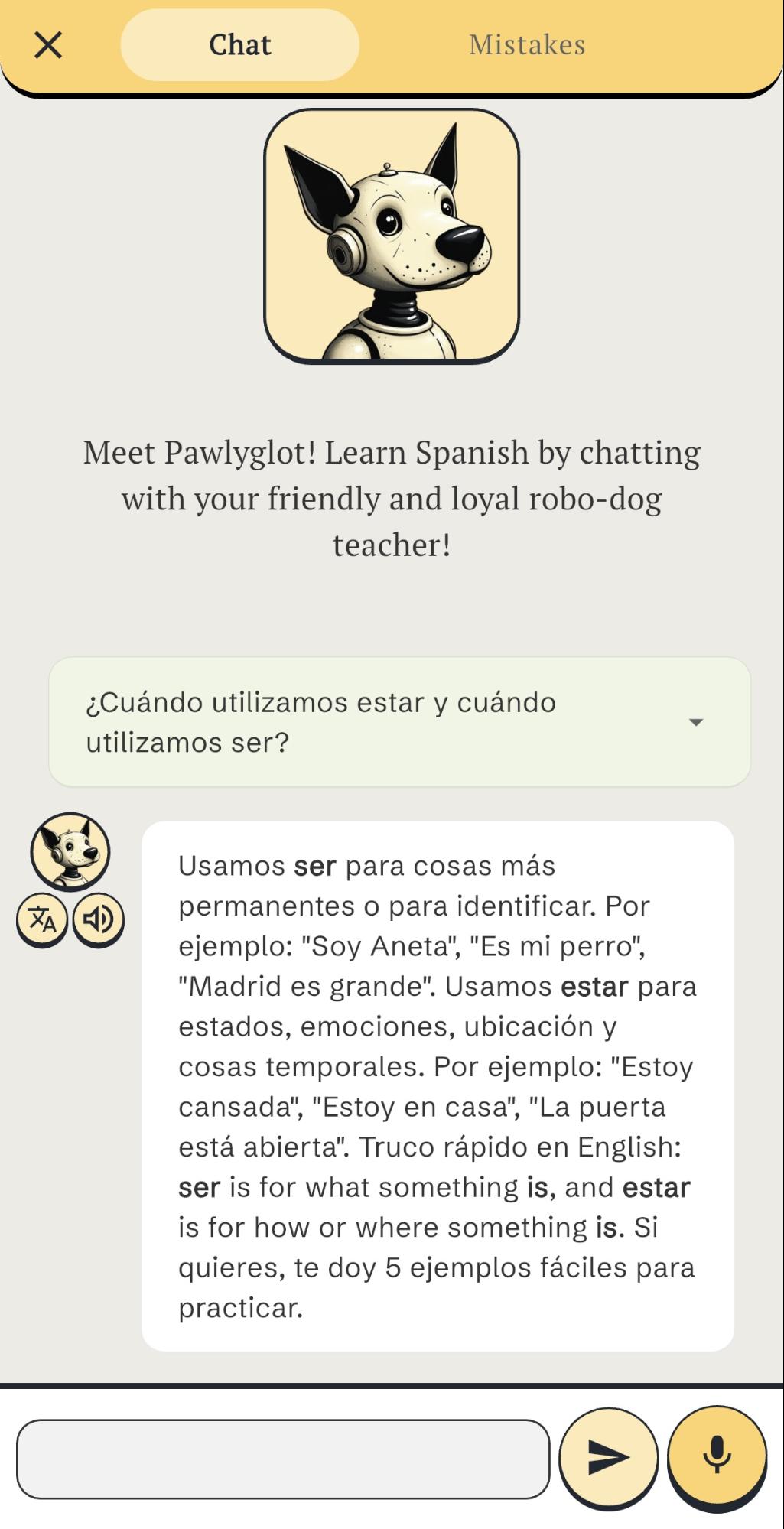
Vocabuo vs Anki: which vocabulary app actually helps you remember more?
If you have ever spent any time researching vocabulary learning apps, you have encountered Anki. It appears at the top of almost every recommendation thread, praised by medical students, law students, polyglots, and also serious language learners all over the world. The praise is definitely not undeserved - Anki is genuinely powerful.
It is also, by almost universal agreement, a pain to use.
The setup takes hours, the interface looks like it was designed in 2006 (because it largely was) and creating a deck that actually works the way you want requires reading documentation, watching YouTube tutorials, scrolling through many Reddit threads and installing plugins. And once you have done all of that, you still have to find or create the cards yourself.
This article is for language learners who understand that spaced repetition is the right method and who want to know whether there is a better tool for practicing it than Anki. We will look honestly at what each app does, where each one falls short, and which one is more likely to get vocabulary into your long-term memory given how most real learners actually study.
What both apps get right: the science of spaced repetition
Before comparing the two, it is worth establishing what they share, because the most important thing about both Vocabuo and Anki is that they are built on the same scientific foundation.
Spaced repetition is one of the most validated methods in cognitive science. The core insight, first demonstrated by Hermann Ebbinghaus in the 1880s and confirmed by hundreds of studies since, is that memory is not fixed at the moment of learning. It decays over a predictable curve and the most efficient way to counter that decay is to review information at increasing intervals, timed to occur just before the moment of forgetting.
A genuine spaced repetition system tracks your performance on every individual word and uses that data to schedule the next review. Words you know well get shown less frequently, freeing up your study time for items you are struggling with. Words you consistently forget get shown more often, at shorter intervals, until your memory of them becomes stable enough.
Both Vocabuo and Anki implement this mechanism. If you use either app consistently and honestly - meaning actually pressing “Didn’t know, show again” when you couldn’t remember the word - both will move vocabulary into long-term memory more efficiently than any other study method.
The difference between them is not the science. It’s everything around: the setup, the content, the features and the overall experience of using the app in real life rather than in theory.
What Anki does well
Anki’s reputation is well deserved in several important aspects.
It is completely customisable
Anki is essentially a blank canvas for learning with flashcards. You can create any card type you want: text, audio, reverse cards, cloze deletion (filling in gaps in sentences using active recall).You can add fields for example sentences, etymology, pronunciation notes, grammar tags… You can build decks that work exactly the way your learning style demands, tailored to the exact vocabulary you need in precisely the format that works best for you.
For a highly motivated and technically skilled and confident learner with specific and sometimes even unusual requirements - like a medical student learning specialist vocabulary, a linguist or just a learner of a less commonly studied language - this flexibility is genuinely valuable and hard to replicate in another app.
It covers any language and any subject
Because Anki is a general-purpose flashcard tool rather than a language-specific app, it is not limited to the languages or subjects that a dedicated team has built content for. If you are learning Icelandic, studying for a pharmacology exam, or memorising the periodic table alongside your French vocabulary, Anki can handle all of it in one place.
The shared deck library is really enormous
Anki has a large community that has been building and sharing decks for nearly two decades. For common languages like Spanish and common exam subjects, high-quality pre-made decks exist that you can download and use immediately. The best of these are genuinely excellent and represent years of community effort and the sweat, blood and tears that came before you.
Where Anki falls short for language learners
As great and useful as Anki is, it has a set of limitations that matter enormously in practice, especially for language learners rather than the exam-prep students the app was originally designed for.
The setup barrier is genuinely prohibitive for most learners
Getting Anki to the point where it is actually useful for language learning is definitely not a quick and easy process. You need to install the app, understand the difference between note types and card types, configure a deck with the right fields, either find a reliable community deck or create cards from scratch, and learn enough about the settings to ensure the algorithm is actually behaving the way you expect.
For the majority of language learners, this setup phase never fully completes. They spend an afternoon configuring the app, feel uncertain about whether they have done it correctly, and either abandon it altogether or use it in an inadequate way that falls short on the promise of an app that teaches you any subject quickly and pain-free.
This is not at all a critique of Anki’s design choices. Anki is a tool built for power users, and it makes no apology for that! But it does mean that for a learner who wants to start studying Swedish vocabulary this evening, Anki probably won’t be the fastest way to actually start studying Swedish vocabulary this evening. More like in two weeks.
Card quality is your responsibility
The quality of your Anki experience depends almost entirely on you and your ability to create the best quality cards possible, because the already-made community decks vary enormously. Some are on a professional level, meticulously researched and structured, others are riddled with inconsistent translations, missing audio, errors and stress of the late night last-resort effort to pass a stressful exam. There is no guarantee of quality control, and for a language learner who does not yet know enough of the target language to spot errors, this is a huge problem.
That’s why creating your own cards is the more reliable approach, but it transforms vocabulary studying into a two-phase process: first you spend time and energy building cards and then you have to convince yourself to spend more time studying them. For some learners with limited study time (and sometimes even motivation,) this process can be the final nail in the coffin.
It has no language-specific features
Anki is a general flashcard tool. It doesn’t know that you are learning German. It has no concept of CEFR levels, no official vocabulary progression, no understanding of what words a B1 Spanish learner needs versus a C1 one. It does not integrate with the content you consume in your target language. It does not offer A1 explanations when you encounter a word you do not understand. It does not tell you what to study next.
All of these decisions (what vocabulary to learn, in what order, from what sources) are left entirely to you. For an expert language learner who already knows the methodology, this might be completely fine. For the vast majority of learners, it is an invisible tax on every study session.
The interface creates friction
Anki’s desktop app and mobile app have not meaningfully evolved in years. The experience of using the app daily -the visual design, the navigation, the way information is presented during review - is still functional, but also uninspiring to say the least.
This actually matters more than it might seem. Language learning is a years-long commitment. The tool you use for it needs to be something you genuinely want to open every morning. A tool you dread opening is a tool you eventually stop opening altogether.
What Vocabuo does differently
Vocabuo starts from the same scientific foundation as Anki: a true spaced repetition with active recall. However, compared to Anki, Vocabuo builds a whole language-specific experience around it and removes every major friction point in the Anki workflow.
Zero setup. Open the app and start studying.
Vocabuo requires no configuration. You choose your target language, select your current CEFR level, and your first review session is ready to go. There are no note types to configure, no deck settings to understand, no community forums to consult. The algorithm is already calibrated. The vocabulary is already structured. The cards are already built.
For a learner who wants to invest their limited study time in actually studying rather than in configuring a study tool, this is not a minor convenience. It is the difference between thirty minutes of effective vocabulary review and thirty minutes of frustrated tab-switching.
Official CEFR wordlists from A1 to C2
Rather than relying on community-created decks of variable quality, Vocabuo is built on official CEFR wordlists - the same standardised vocabulary framework used by language exams, universities, and professional certification bodies across Europe and beyond.
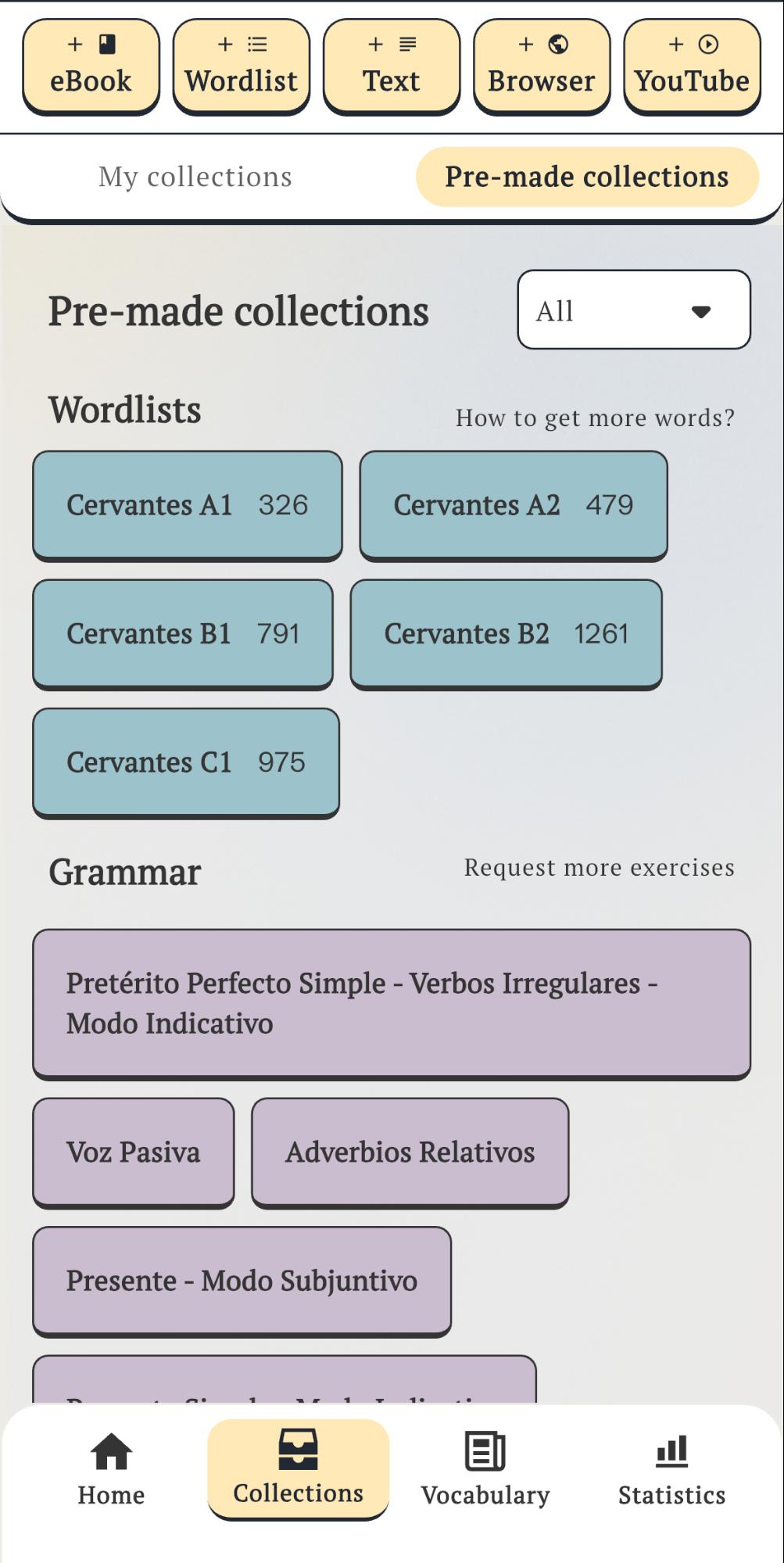
This means two things in practice. First, the vocabulary you study is accurate, professionally curated, and consistently mapped to the level it claims to represent - all the way to C2. Second, you always know where you are on the path. The words between you and the next CEFR level are not some kind of mystery. They are in your queue, being served to you in the right order, at the right time for you to actually progress.
For a B1 Spanish or German learner, this means the app is not showing you random vocabulary from across the language in no specific order. It is showing you the exact 2,000 or so words that stand between your current level and genuine B2 fluency in the order that will build your comprehension most efficiently.
Learn vocabulary from the content you already love
This is the feature that has no equivalent in Anki’s standard offering and that most fundamentally changes the experience of intermediate language learning.
Vocabuo integrates directly with three content sources you are probably already using in your language learning life:
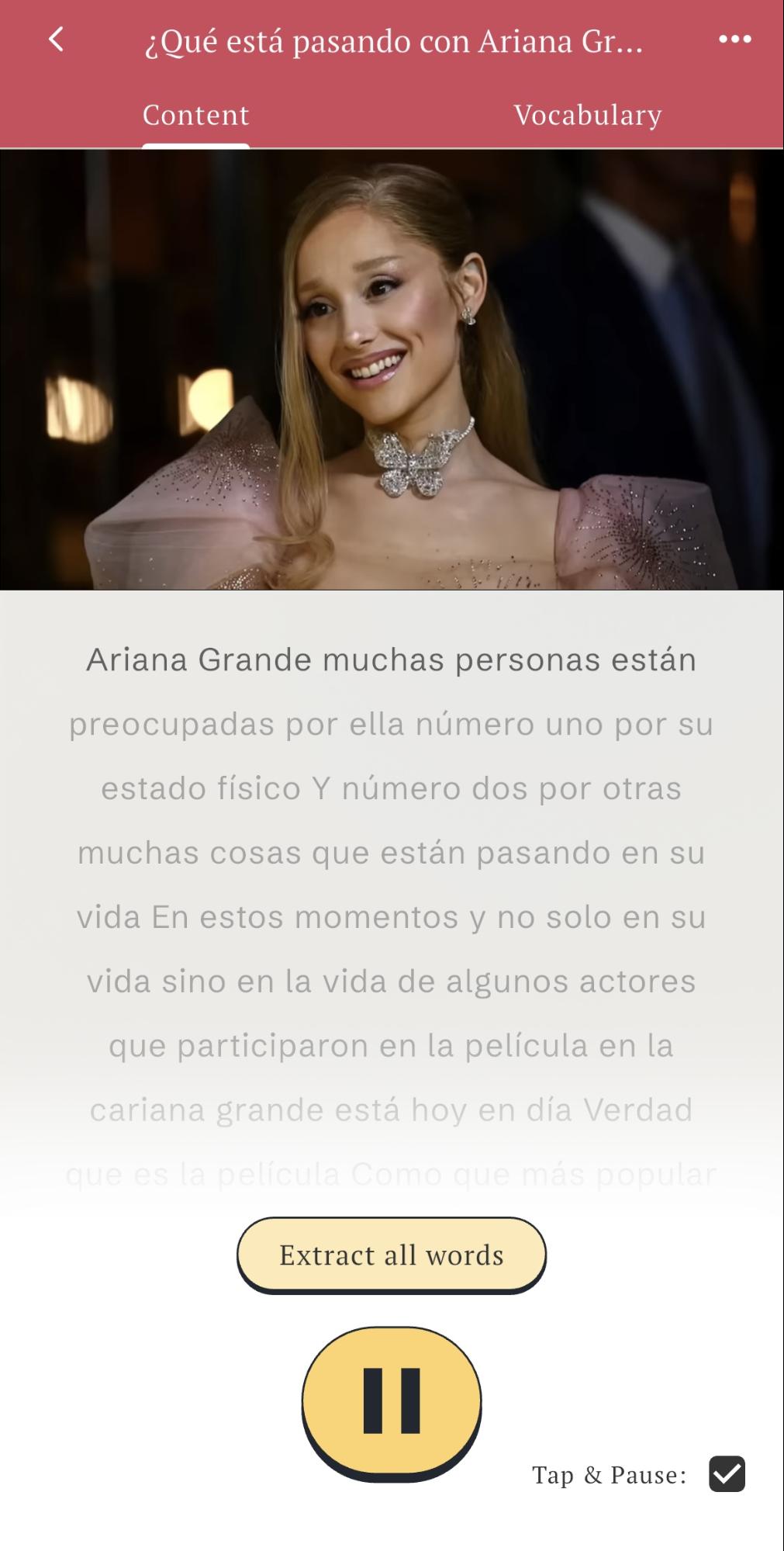
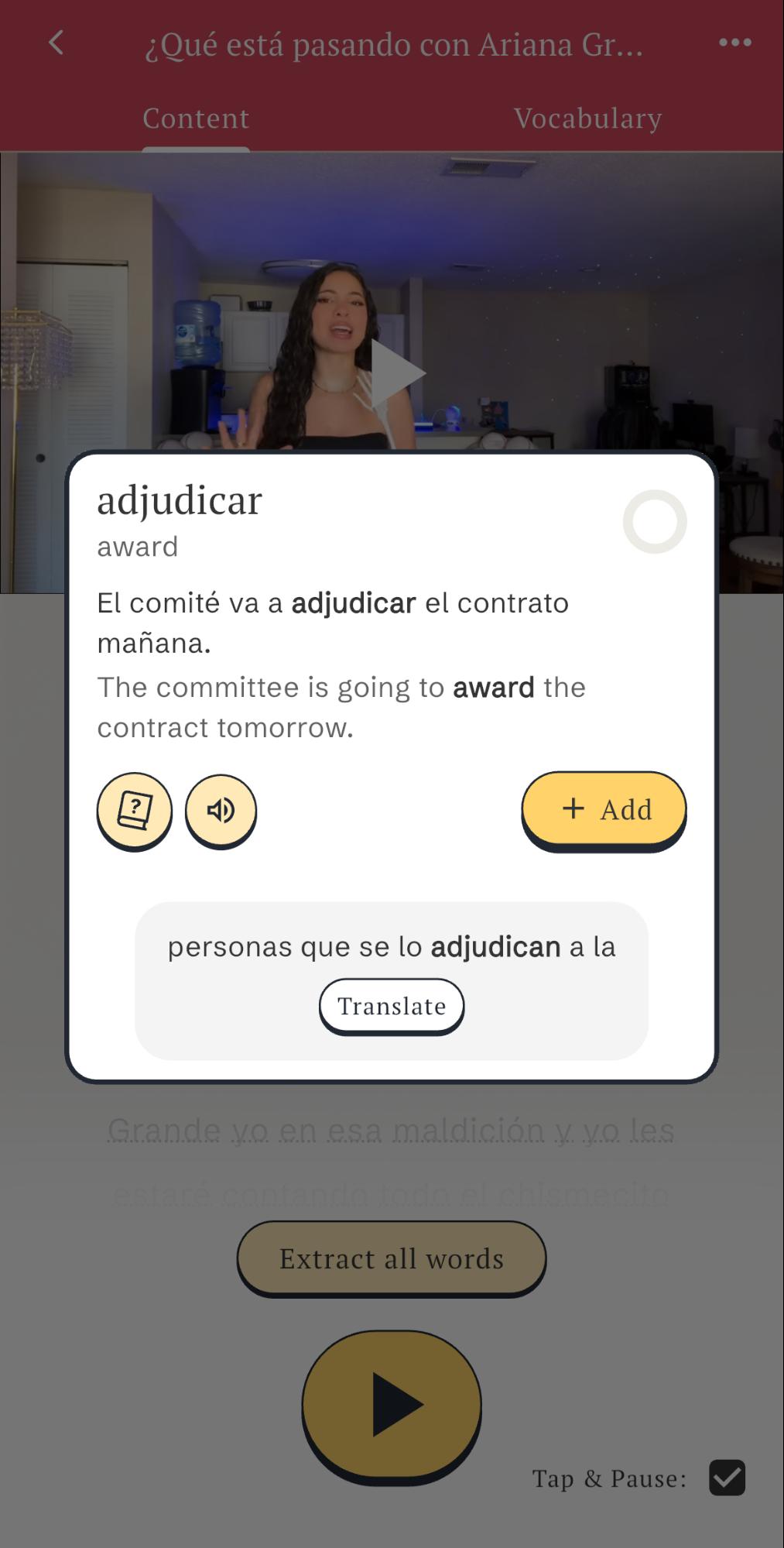
The YouTube player lets you watch any YouTube video directly in the app in your target language with subtitles, and save any unknown word directly to your spaced repetition queue with a single tap. That combines your free time with an enjoyable and structured vocabulary session.
The eBook reader does the same for books and documents. Reading a novel in Spanish and encounter a word you do not know? Add it to your Vocabuo deck in the same moment, without breaking your reading flow or leaving the app. The word enters your SRS queue immediately and will be reviewed at the right interval to ensure it moves into long-term memory.
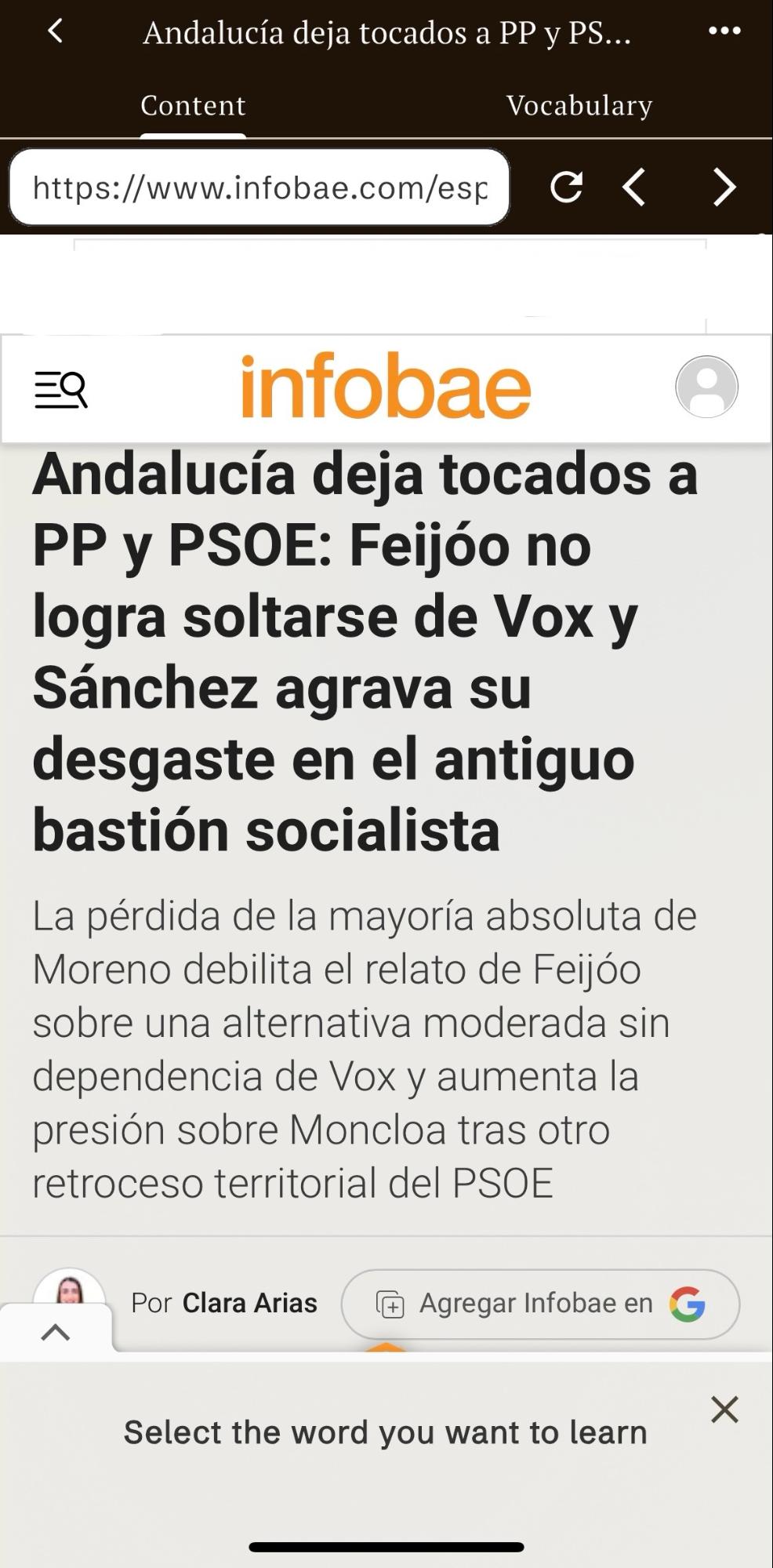
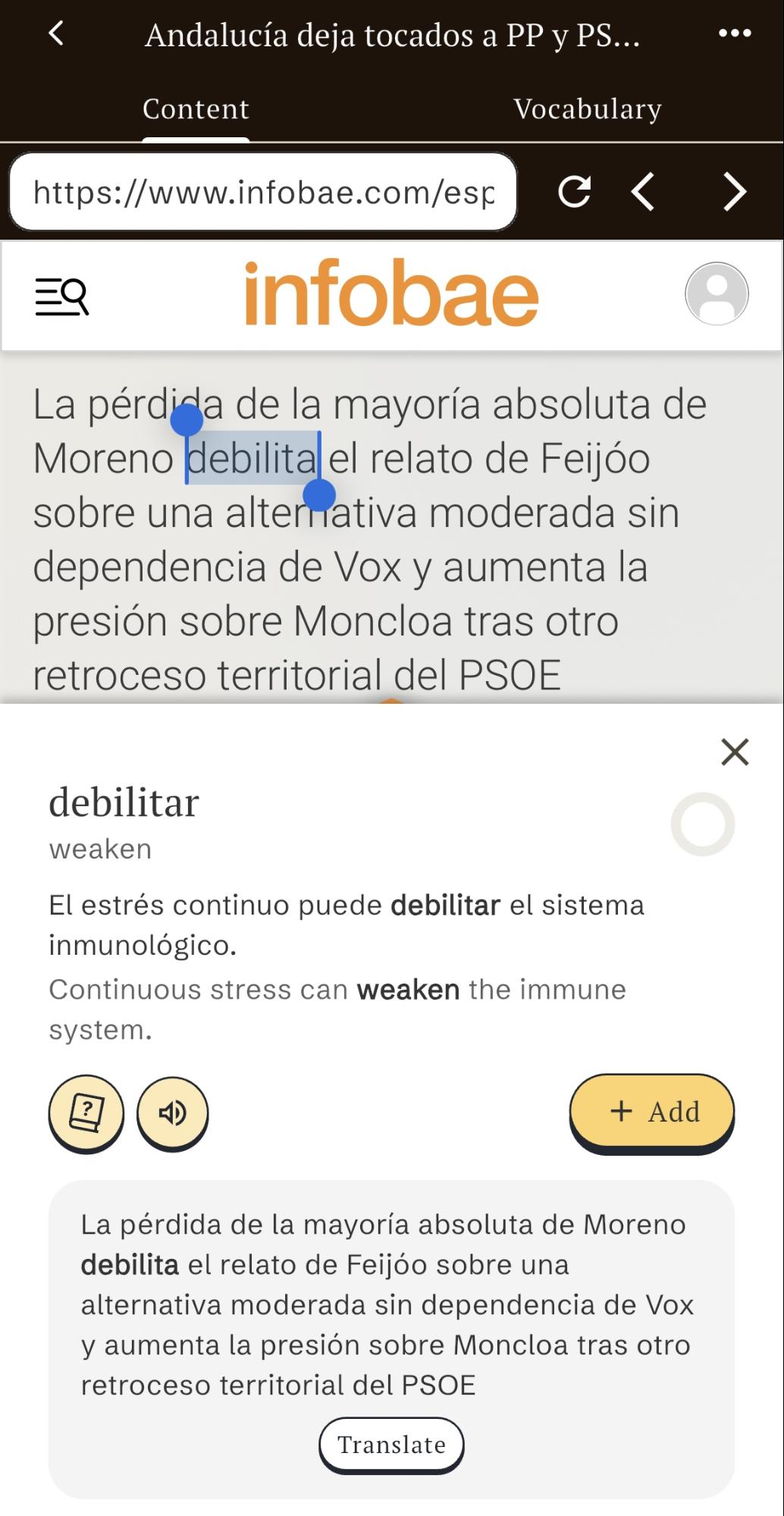
The web reader applies the same logic to articles, blog posts or any other text content in your target language.
The idea and reason behind that is that Vocabuo stops being a separate study tool you have to make extra effort to incorporate into your study sessions and becomes something woven into your entire language learning life. The vocabulary you study is not generic, but it’s the exact vocabulary you are encountering in the content that motivates you to learn the language in the first place. That context makes words significantly easier to retain, because your brain already has a hook for them.
An AI tutor that explains rather than just tests
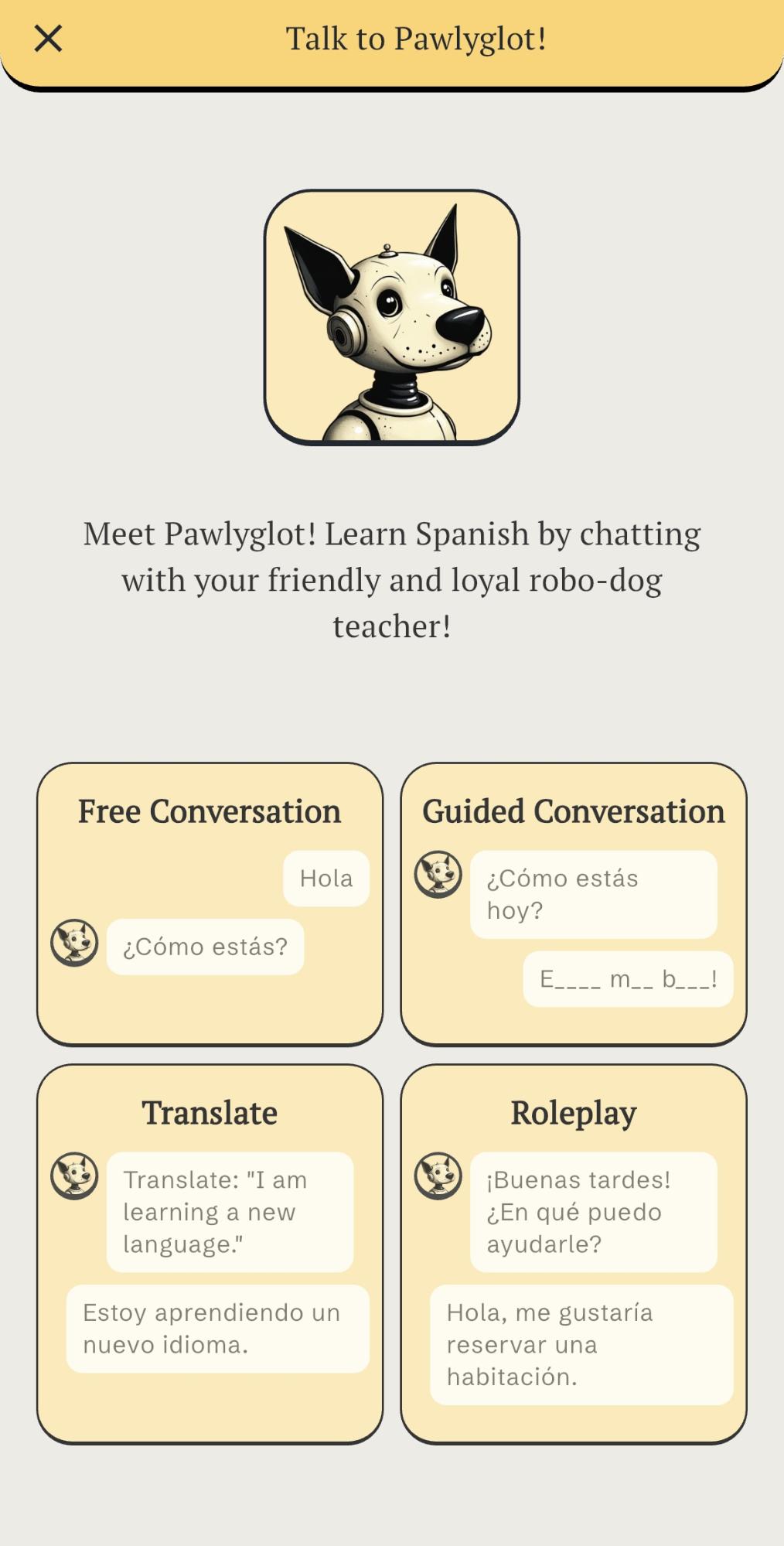
When you encounter a word that you do not fully understand, whether it’s the range of meaning, its grammatical behaviour, why it appears in one context but not another, you can ask the Vocabuo AI tutor Pawlyglot directly in english or in your target language and receive an explanation tailored to your level.
This is the kind of support that used to require either a human teacher or significant time spent searching grammar forums and language learning communities. Having it integrated into the moment of study, when the word is in front of you and the question is currently in your mind, without having to wait for another lesson with your teacher, changes the quality of understanding you build around the new vocabulary.
Anki tests whether you know something. Vocabuo makes sure you understand it.
Progress measured in vocabulary retained, not days logged
Vocabuo tracks your progress in terms of words known at each CEFR level, words currently in active review, and words fully acquired into long-term memory. This gives you a clear, honest picture of where you stand at any given moment, not only how consistent in practicing you have been, but what your brain actually owns.
There are no hearts or lives or leaderboards and limitations, because these features are designed to keep you opening the app every day, not to reflect genuine learning process. Vocabuo’s position is that the only metric worth tracking is the one that tells you how many words you actually know, because that is the only number that gets you closer to fluency.
Vocabuo vs Anki: an honest side-by-side
| Anki | Vocabuo |
| Core method | Spaced repetition | Spaced repetition |
| Setup required | Significant | None |
| Vocabulary content | Community decks, variable quality | Official CEFR wordlists A1-C2 |
| Language specific | No General purpose | Yes Built for language learners |
| CEFR level structure | No | Yes Full A1 to C2 |
| YouTube integration | No | Yes |
| eBook reader | No | Yes |
| Web reader | No | Yes |
| AI tutor | No | Yes |
| Active recall | Yes | Yes |
| Customisability | Extremely high | Structured |
| iOS app cost | 25€ (AnkiMobile) | Free (with premium tier) |
| Android app cost | Free | Free (with premium tier) |
| Interface | Functional, dated | Modern, minimal |
| Best for | Power users, any subject | Language learners, zero friction |
The honest summary: if you are a highly technical learner who wants total control over every aspect of your flashcard system and studies multiple subjects alongside your language, Anki is still the most powerful general tool available. If you are a language learner who wants to get to work immediately, study vocabulary that is actually right for your level, and integrate your learning with the content you consume, Vocabuo is the more effective tool for your specific situation.
These are not the same app at different price points. They are built for different goals and learners with different needs.
Which one is right for you?
If you’re still not completely sure which app to focus on…
Choose Anki if:
You are comfortable with a technical setup process and enjoy customising your tools. You study multiple subjects alongside language learning and want everything in one place. You are learning a language that Vocabuo does not currently support. You have specific, unusual requirements that a pre-structured app cannot meet. You have already built a well-functioning Anki workflow and are genuinely using it consistently, because in that case, switching tools for the sake of switching tools is very rarely worth the disruption.
Choose Vocabuo if:
You want to start studying immediately without any time spent on just setting up and searching for the wordlists. You are learning Spanish, English, French, German, Italian, or Swedish. You are at intermediate level and finding that vocabulary is not sticking the way it used to. That’s the plateau that Anki’s general-purpose structure can’t specifically address. You learn from YouTube videos, eBooks, or articles in your target language and want to connect that consumption to structured vocabulary review. You want CEFR-aligned progression that tells you exactly where you are on the path to fluency. You have tried Anki, found it overwhelming to set up or maintain, and want the same method without the friction.

 Learn English
 Learn Spanish
 Learn French
 Learn German
 Learn Italian
 Learn SwedishLearn SmarterSpaced RepetitionReviews timed to land right before you would forget, so words stick for good.Word ListsLearn exactly the vocabulary you need, from CEFR lists to songs and books.Learn from ContentTurn the books, articles and videos you love into vocabulary lessons.CEFR LevelsA1 to C2 explained, and how to learn the right vocabulary for yours.