Vocabuo vs. Drops: Is 5 Minutes of Gamified Vocabulary Enough to Become Fluent?
If you’ve spent any time looking for language learning apps, you’ve almost certainly run into Drops. With its slick micro-animations, vibrant design, and strict 5-minute daily limit, it frames vocabulary building as a fun, fast visual game.
It’s aesthetically gorgeous and incredibly easy to use. But here’s the million-dollar question: Can matching drop-down icons for 5 minutes a day actually build a usable vocabulary?
To answer that, we have to look at how brain memory works and compare Drops with a content-first, context-rich alternative like Vocabuo.
Let's break down how both apps approach vocabulary and which one will actually help you move from casual tapping to real comprehension.
The Core Philosophy: Visual Matching vs. Real-World Context
Both apps focus on learning words rather than heavy grammar drills. However, their core learning mechanics take completely opposite paths.
- Drops: Relies on visual association and speed. You swipe, drag, and drop illustrations to pair them with target words in fast-paced 5-minute sessions. It’s designed as a daily micro-habit for learning isolated words by category (food, travel, weather).
- Vocabuo: Relies on context and authentic content. Instead of grinding isolated word-to-picture lists, you read real articles, watch YouTube videos, or import web pages. Words are learned inside the exact sentences where they naturally occur.
Feature Comparison: Vocabuo vs. Drops
| Feature | Drops | Vocabuo |
|---|
| Primary Focus | Visual word association & casual daily micro-habits | Contextual vocabulary acquisition from real content |
| Learning Material | Pre-curated, themed word lists with minimalist illustrations | Real-world web articles, news, YouTube videos, and eBooks |
| Session Format | Timed 5-minute fast-paced swipe sessions | Flexible reading, listening, and smart flashcard reviews |
| Context Level | Single isolated words or ultra-short 2-word phrases | Full, natural sentences powered by AI context |
| Review Method | Visual matching, tap-to-pair, word assembly games | Active recall flashcards, typing, and sentence building |
| Ideal User | Beginners looking for a casual, low-effort start | Intermediate/advanced learners aiming for real fluency |
Where Drops Shines (and Where It Hits a Wall)
There is a reason Drops won design awards: it feels less like studying and more like playing Candy Crush for your brain.
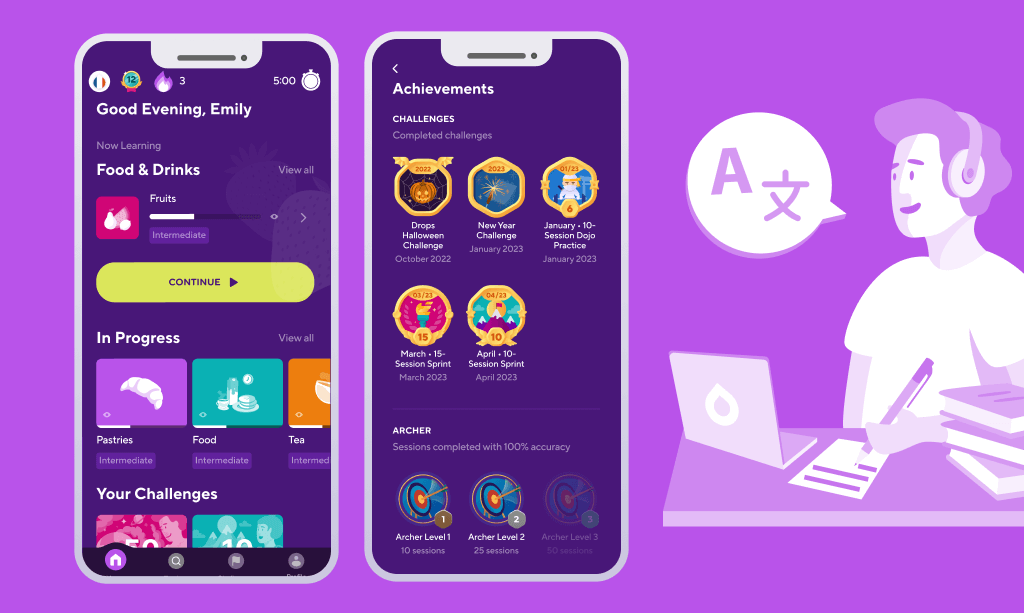
The Good:
- Zero Barrier to Entry: The 5-minute timer removes all resistance. Anyone can spare 300 seconds a day.
- Beautiful Visuals: Pairing clean illustrations directly with target words helps you avoid translating through your native language in your head.
- Great for Absolute Beginners: It’s a fun, stress-free way to learn basic nouns before a vacation (e.g., coffee, airport, hotel).
The Pitfalls:
- The "Icon Illusion": Recognizing a minimalist drawing of an apple in a timed game doesn't mean you'll recognize the word apple inside a fast German news broadcast or a complex sentence.
- No Sentence Context: Language is not a list of isolated nouns. Words change meaning depending on prepositions, verbs, and tone. Drops completely misses how words interact with each other in real life.
- Low Retention Efficiency: As we explored in our guide on the biggest mistakes people make when learning vocabulary, learning words in thematic clusters (learning 20 animal names at once) actually increases memory interference, making words harder to recall later.
Where Vocabuo Shines
Vocabuo takes the efficiency of spaced repetition and applies it to the stuff you actually care about real content.
Why Learners Switch to Vocabuo:
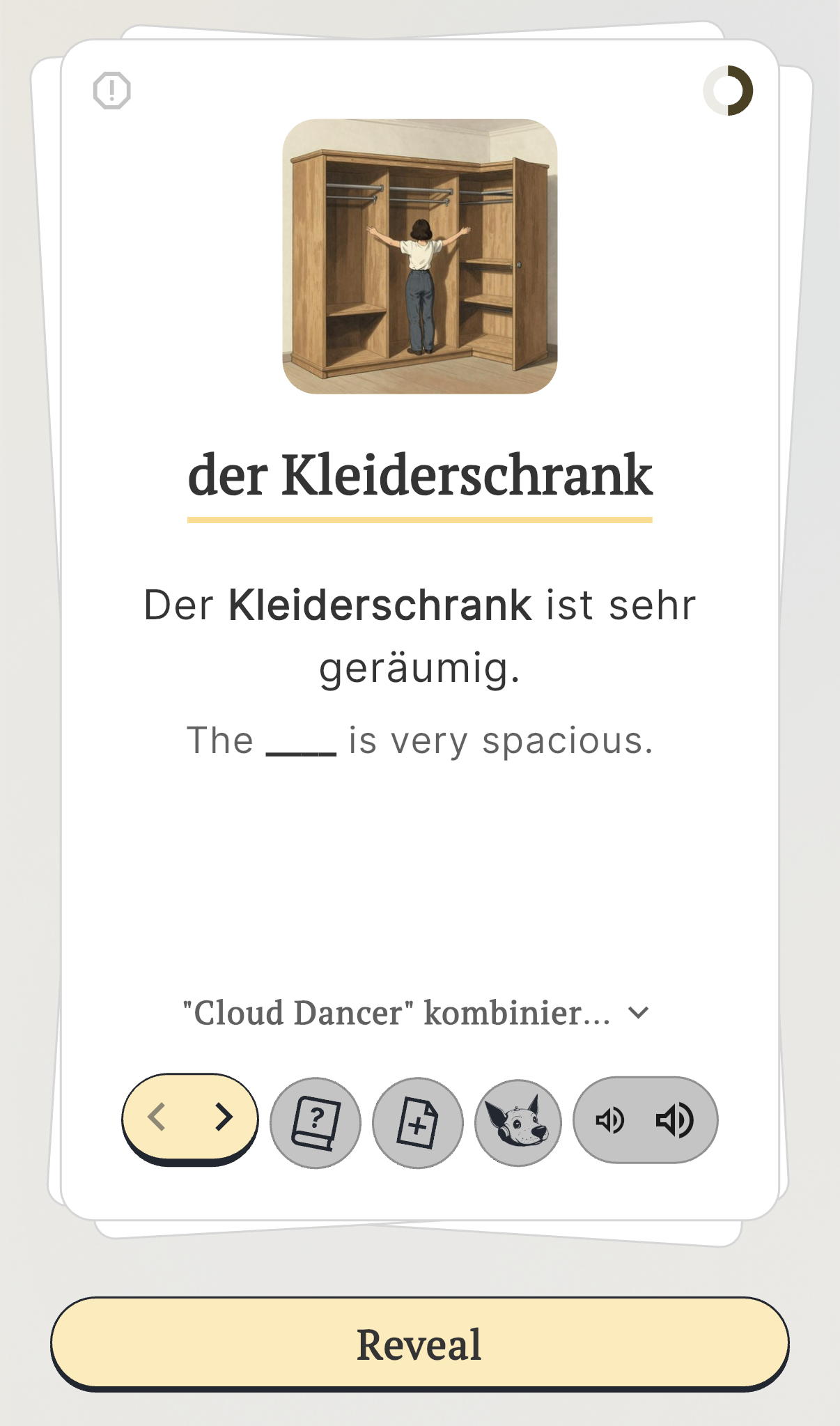 Learning in Real Context: According to research on cognitive science and how memory works, your brain stores information based on the effort it takes to retrieve it. Vocabuo forces active recall by showing words inside full, meaningful sentences.
- Break Through the Plateau: If you're feeling stuck on the B1 language plateau, matching picture icons won't help you transition to real books or podcasts. Vocabuo lets you consume real content while automatically taking care of the flashcards.
Ditch Gamified Gimmicks: Similar to our take on Duolingo alternatives, games and streaks are great for app engagement, but smart Spaced Repetition algorithms are what actually move words into long-term memory.
- You Pick the Content: Instead of learning preset lists of words you might never use, you read and watch content that fits your job, your hobbies, and your goals.
The Verdict: Which One Should You Choose?
Choose Drops if:
- You are a complete beginner looking to pick up basic noun vocabulary for an upcoming trip.
- You want a visually stunning, low-stress game to replace 5 minutes of mindless social media scrolling.
Choose Vocabuo if:
- You want to read real articles, watch YouTube videos, and understand native content without constantly switching to a dictionary app.
- You want to learn words in full sentences so you actually know how to use them when speaking or writing.
- You care about real learning outcomes over app mini-games.
Ready to move past matching picture games? Stop matching icons and start building a real, context-driven vocabulary. Try Vocabuo.
Sources
- Krashen, S. (1982). Principles and Practice in Second Language Acquisition. Pergamon Press. [Link](https://www.sdkrashen.com/)
- Webb, S. (2007). The Effects of Repetition on Vocabulary Knowledge. Applied Linguistics.
- Gairns, R., & Redman, S. (1986). Working with Words: A Guide to Teaching and Learning Vocabulary. Cambridge University Press.
- Vocabuo Blog. What is Spaced Repetition? [Link](What is Spaced Repetition?)
- Vocabuo Blog. Vocabuo vs. Anki: Which Vocabulary App Helps You Remember More? Link

 Learn English
 Learn Spanish
 Learn French
 Learn German
 Learn Italian
 Learn SwedishLearn SmarterDictionaryLook up words in the Vocabuo dictionary.Spaced RepetitionReviews timed to land right before you would forget, so words stick for good.Word ListsLearn exactly the vocabulary you need, from CEFR lists to songs and books.Learn from ContentTurn the books, articles and videos you love into vocabulary lessons.CEFR LevelsA1 to C2 explained, and how to learn the right vocabulary for yours.

