Vocabuo vs. LingQ: Which App Is Better for Learning Vocabulary from Real Content?
If you’ve moved past the beginner phase of language learning, you already know the ultimate goal: you want to stop doing fill-in-the-blank exercises and start reading real books, watching YouTube, and understanding actual articles.
This approach, learning through authentic native content, is hands down the most effective way to build a rich, natural vocabulary. In linguistics, this principle is backed by Stephen Krashen’s famous Comprehensible Input Hypothesis, which proves that we acquire languages best when we understand messages in context rather than memorizing isolated rules.
Two popular apps take this exact philosophy and turn it into a tool: LingQ and Vocabuo. Both promise to turn real text into your personal learning material. But they do it in completely different ways, with vastly different learning curves.
So, which one actually helps you acquire vocabulary faster without frustrating you along the way? Let’s break it down.
1. The Core Concept: How They Work
Both apps bridge the gap between reading real content and retaining new words. Instead of forcing you through artificial beginner drills, both tools let you click on words you don’t know, see instant translations, and save those words to study later.
However, the user experience differs dramatically:
- LingQ: Acts like a massive, customizable content library. You import or choose a full text, and every single word on the screen is color-coded based on whether you know it, are learning it, or haven't seen it yet.
- Vocabuo: Acts like a streamlined, smart reader and flashcard engine. It focuses heavily on reducing friction, giving you short, digestible pieces of content with instant AI-powered context and zero setup hassle.
2. Feature Comparison: Vocabuo vs. LingQ
| Feature | LingQ | Vocabuo |
|---|
| Best For | Hardcore language nerds who want total control over huge texts | Learners who want a fast, modern, friction-free daily habit |
| User Interface (UI) | Feature-rich, but visually busy and dated | Clean, minimal, and intuitive |
| Learning Curve | High (takes time to understand system & settings) | Instant (open and start learning in 30 seconds) |
| Contextual Flashcards | Manual or semi-automated | Automatic AI-generated example sentences |
| Spaced Repetition | Built-in (requires manual management/reviewing) | Built-in smart algorithm (fully automated) |
| Content Import | Web articles, books, audiobooks, Netflix/YouTube transcripts | News, articles, custom text, and video content |
3. Where LingQ Shines (and Where It Falls Short)
Co-founded by polyglot Steve Kaufmann, LingQ was built around a brilliant concept: read what you love. If you want to import a 500-page book or a 2-hour podcast transcript, LingQ can handle it.
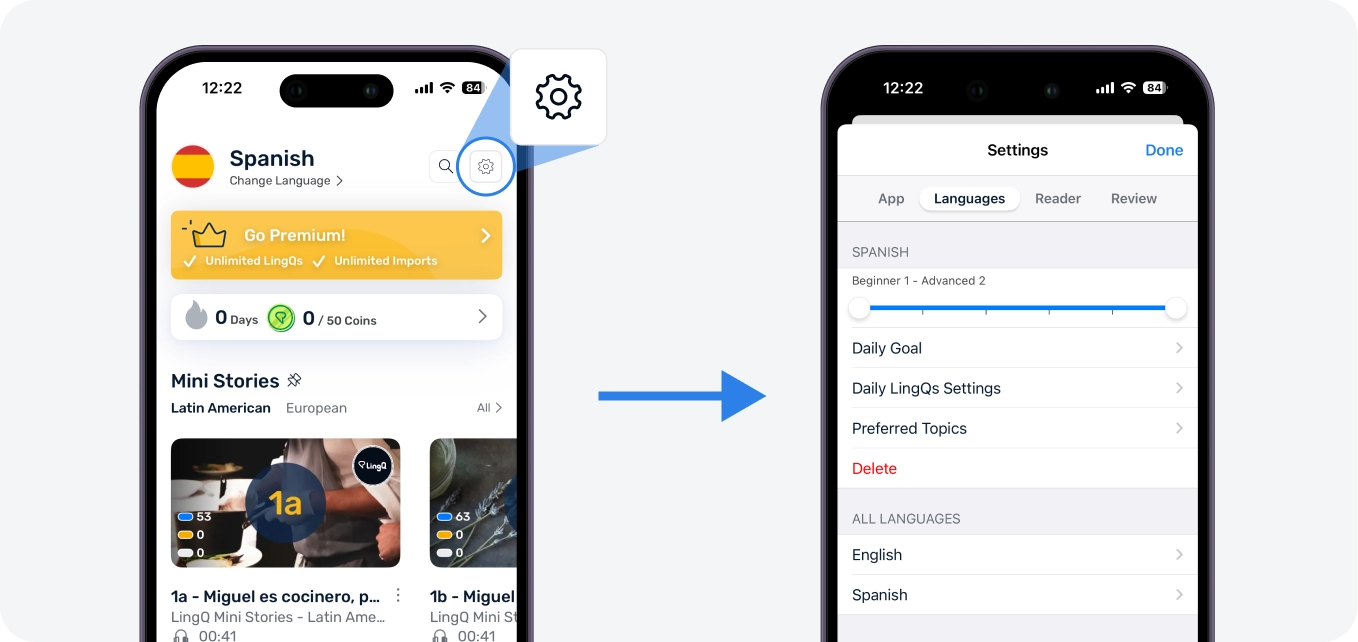
The Good:
- Massive Library: Decades of community-contributed lessons across dozens of languages.
- Deep Customization: You can track every single word you’ve ever encountered across your entire learning history.
The Frustrations:
- Overwhelming Interface: Opening a page in LingQ can feel like looking at an Excel spreadsheet wrapped in highlighters.
- High Admin Time: You spend a lot of time micro-managing word statuses (Did I know this word? Is it level 2 or level 3?). You end up managing the app instead of actually learning.
4. Where Vocabuo Shines
Vocabuo took the power of content-based learning and stripped away the clutter. It was designed specifically for people who want the benefits of immersion without feeling like they need a user manual just to read an article.
Why Learners Switch to Vocabuo?
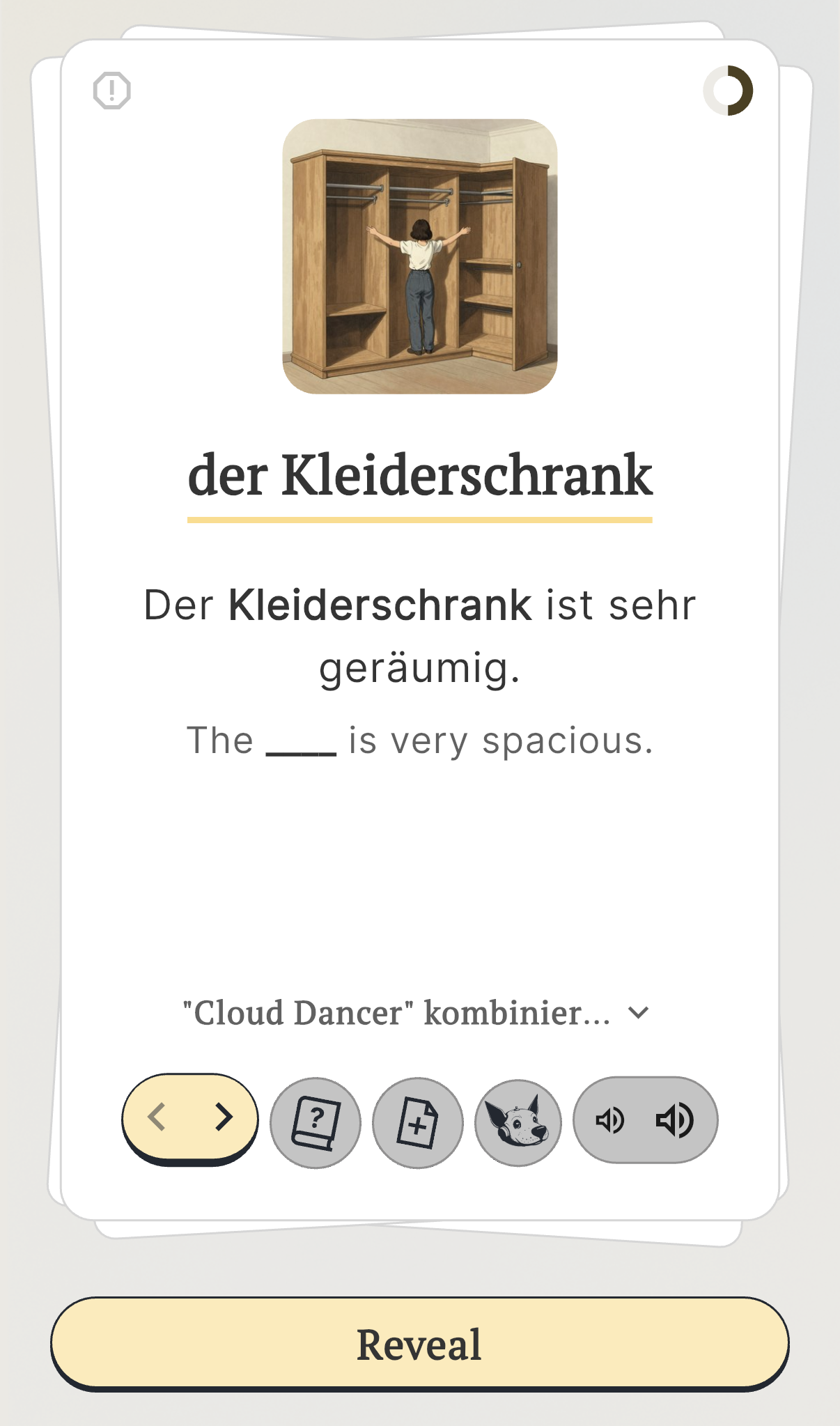 Zero Admin Overhead: Unlike traditional flashcard systems like Anki, you don't waste time managing card levels, tags, or organizing decks. The AI automatically grabs the exact sentence where you found the word, creating instant context-rich cards.
- Distraction-Free Reading: The reader interface is clean and modern. You focus on understanding the story, not on clicking through dozens of technical settings.
- Smart SRS that Actually Fits Daily Life: Flashcard reviews leverage a smart Spaced Repetition algorithm that adapts to how quickly you forget words. Reviews are fast, bite-sized, and built around natural sentences—making it effortless to maintain a 10-minute daily habit.
- Breaking the Intermediate Plateau: It is specifically engineered for intermediate learners struggling with the dreaded B1 language plateau who need to transition from gamified apps like Duolingo to authentic native fluency.
5. The Verdict: Which One Should You Choose?
Choose LingQ if:
- You are an advanced polyglot who loves tweaking every single parameter of your learning database.
- You want to import massive end-to-end eBooks or audiobooks into a single desktop workspace.
Choose Vocabuo if:
- You tried LingQ and quit because the interface felt cluttered or overwhelming.
- You want to read real-world articles, news, and videos while automatically building functional vocabulary.
- You value speed, modern UX, and spending your time learning, not configuring an app.
Ready to level up your vocabulary without the hassle?
You don't need hours of admin work to master a language according to CEFR standards; just the right content and a clean tool. Give Vocabuo a try today and see how effortless context-based learning can feel.
---
Sources
- Krashen, S. (1982). Principles and Practice in Second Language Acquisition. Pergamon Press. [Link](https://www.sdkrashen.com/)
- Nation, I. S. P. (2013). Learning Vocabulary in Another Language. Cambridge University Press.
- Council of Europe. Common European Framework of Reference for Languages (CEFR).[Link](https://www.coe.int/en/web/common-european-framework-reference-languages/level-descriptions)
- Vocabuo Blog. What is Spaced Repetition? [Link](What is Spaced Repetition?)
- Vocabuo Blog. Vocabuo vs. Anki: Which Vocabulary App Actually Helps You Remember More? [Link](Vocabuo vs Anki: which vocabulary app actually helps you remember more?)
- Vocabuo Blog. The Language Learning Plateau: Why You're Stuck at B1 (and How to Break Through) Link

 Learn English
 Learn Spanish
 Learn French
 Learn German
 Learn Italian
 Learn SwedishLearn SmarterDictionaryLook up words in the Vocabuo dictionary.Spaced RepetitionReviews timed to land right before you would forget, so words stick for good.Word ListsLearn exactly the vocabulary you need, from CEFR lists to songs and books.Learn from ContentTurn the books, articles and videos you love into vocabulary lessons.CEFR LevelsA1 to C2 explained, and how to learn the right vocabulary for yours.

