Vocabuo vs. Memrise: Which Vocabulary App Helps You Move from Passive Recognition to Active Speaking?
When you’re building your vocabulary, it’s easy to get trapped in a frustrating paradox: you recognize a word when you see or hear it, but the moment you try to speak, your mind goes completely blank.
This is the bridge between passive recognition and active vocabulary, and how an app handles this transition makes all the difference.
Two popular apps target vocabulary acquisition from very different angles: Memrise and Vocabuo. Memrise relies heavily on structured flashcards, community courses, and short video clips of native speakers. Vocabuo, on the other hand, focuses on acquiring vocabulary through authentic, context-rich content and AI-powered sentence recall.
So, which tool will actually help you use the words you learn in real conversations? Let's take a look.
The Core Philosophy: Memorization vs. Contextual Immersion
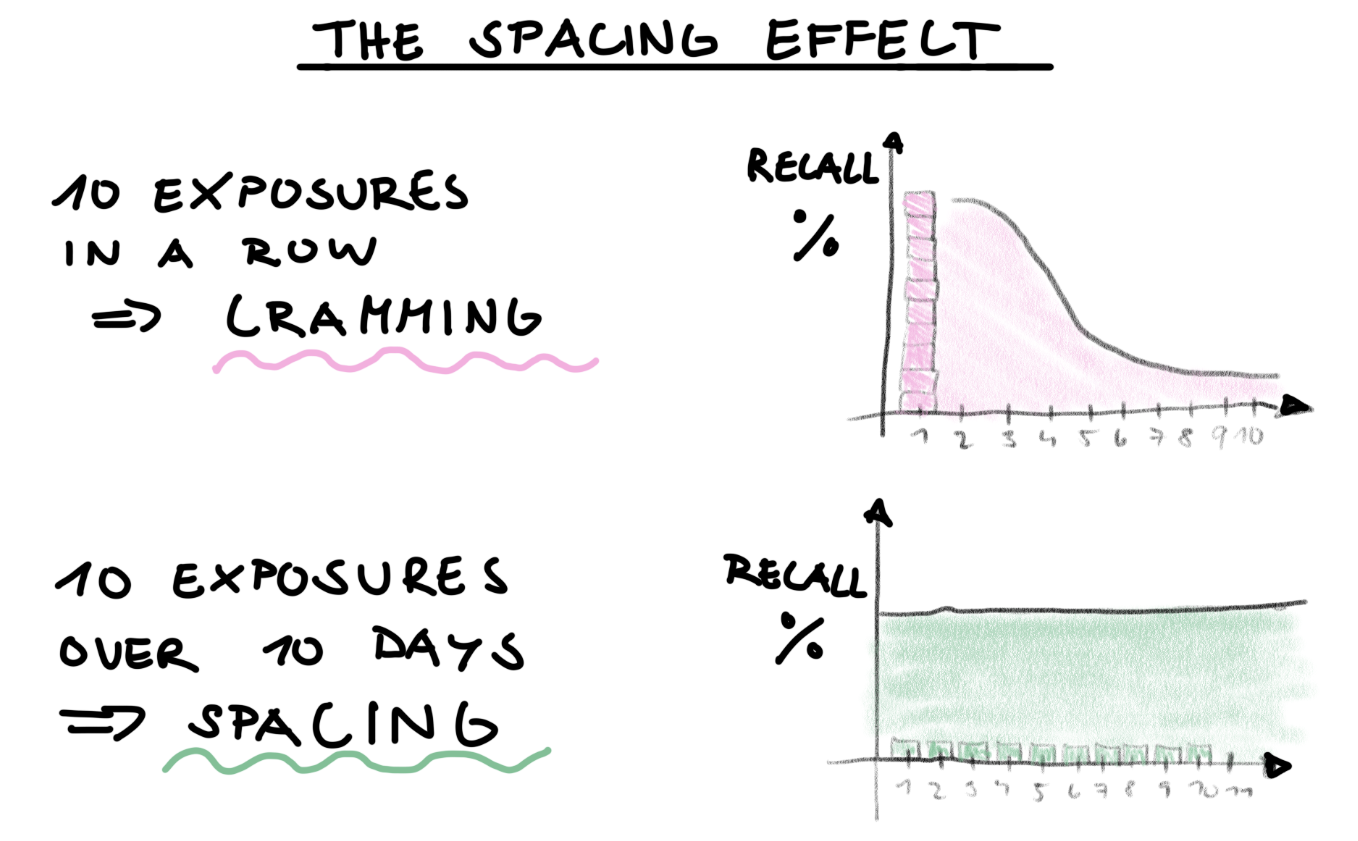
While both tools use spaced repetition to help you retain words, their approach to how you encounter those words couldn't be more different.
- Memrise: Built around structured decks and gamified drills. You learn individual words or short phrases through multiple-choice quizzes, typing tests, and "Mems" (mnemonics). It focuses heavily on repetition until a word sticks in your short-term memory.
- Vocabuo: Built around reading and watching authentic content. Instead of studying pre-made word lists, you encounter words inside real articles, news, and videos. The app automatically creates context-rich flashcards based on the exact sentence where you found the word.
Feature Comparison: Vocabuo vs. Memrise
| Feature | Memrise | Vocabuo |
|---|
| Best For | Beginners learning core phrases and hearing native pronunciation | Intermediate learners bridging the gap between reading and speaking |
| Learning Method | Multiple-choice drills, typing tests, video clips | Authentic reader, context-based SRS, AI example sentences |
| Content Source | Structured official courses & user-generated decks | Real-world news, web articles, custom texts, YouTube videos |
| Vocabulary Type | Isolated words, fixed phrases, topical lists | Natural vocabulary learned in full sentence context |
| User Experience | Gamified, colourful, quiz-heavy | Clean, minimal, distraction-free |
| Review Style | Fast-paced recognition quizzes | Sentence-based recall using smart algorithms |
Where Memrise Shines (and Where It Hits a Ceiling)
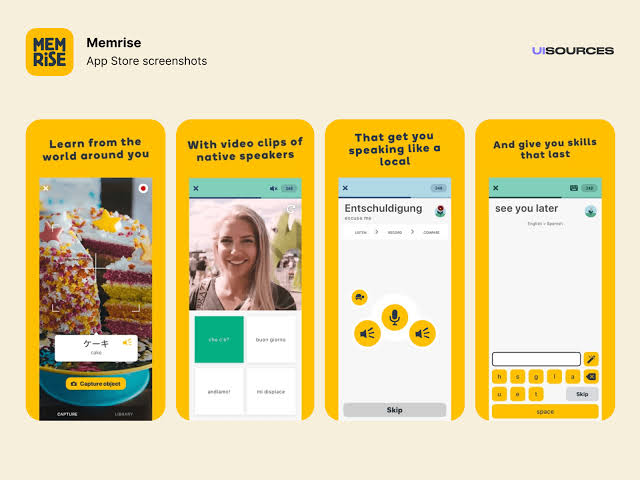
Memrise established itself years ago as a pioneer in online flashcard learning. Its standout feature is its massive library of short video clips featuring local native speakers ("Learn with Locals"), allowing you to hear real accents and intonation.
The Good:
- Great for Absolute Beginners: If you're starting a language from scratch, Memrise gives you structured introductory vocabulary with audio from native speakers.
- Video Clips: Seeing real people speak helps train your ear to different accents and natural pacing.
The Frustrations:
- The "Passive Memory" Trap: Multiple-choice questions make you feel like you know a word because you can pick it out of four options. But in the real world, there are no multiple-choice prompts when you're trying to form a sentence.
- Isolated Vocabulary: Learning words out of context makes it difficult to understand nuance, grammar patterns, or how native speakers actually pair words together (collocations).
- Repetitive Drills: The gamified review cycle can quickly start to feel like grinding in a video game rather than making meaningful linguistic progress.
Where Vocabuo Shines
Vocabuo was designed to solve the exact problem Memrise creates for intermediate students: the gap between knowing what a word means and knowing how to use it.
Why Learners Switch to Vocabuo:
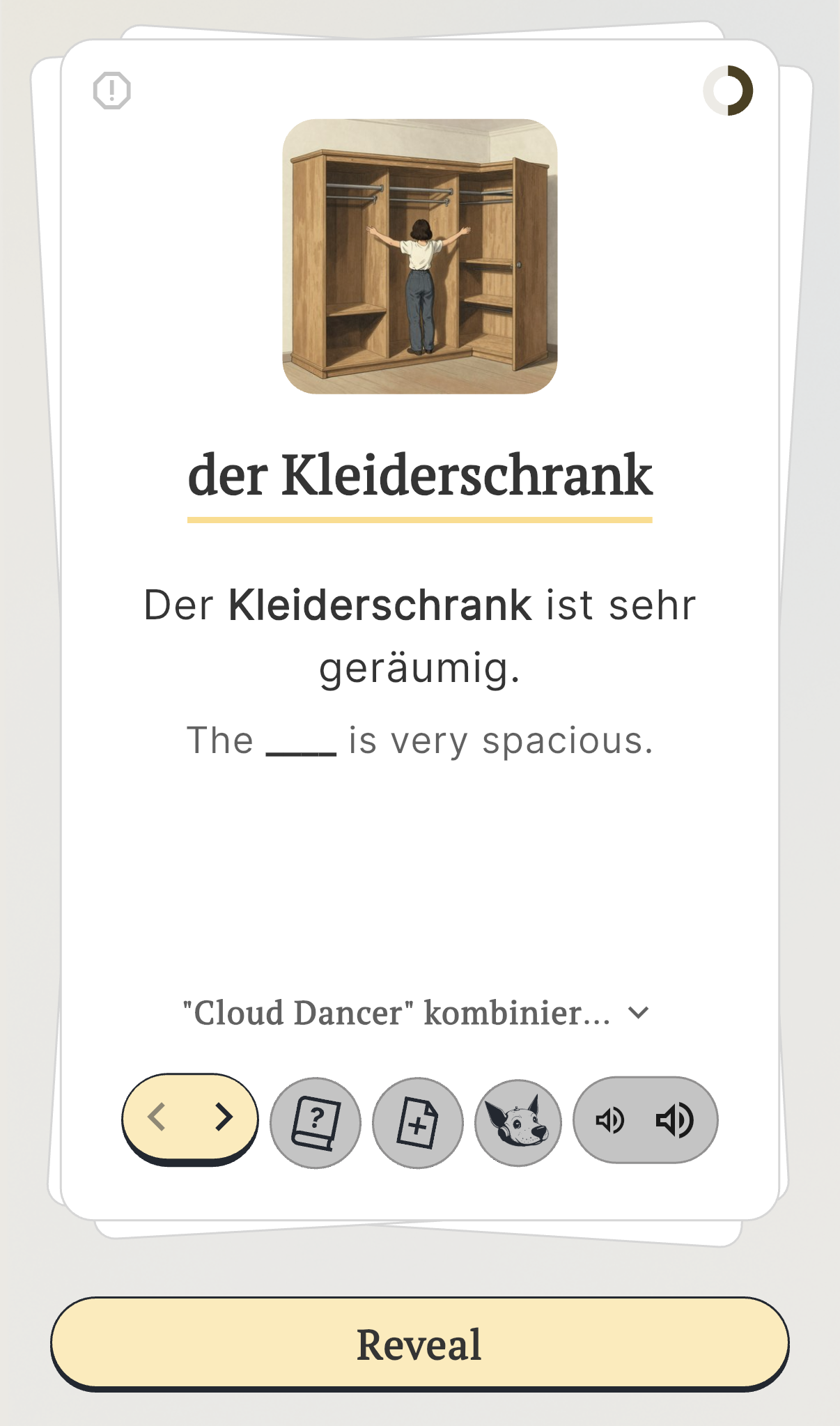 Context Over Isolated Words: Every card in Vocabuo is anchored to a real sentence. According to linguistic research on contextual vocabulary acquisition, learning words inside full sentences dramatically improves retention and recall speed during speech.
- No Multiple-Choice Crutches: Vocabuo challenges your memory actively. Instead of guessing from a list of options, you work with sentence context, pushing your brain to recall the word naturally—just like you would in conversation.
- Seamless Transition from Beginner Apps: If you're feeling stuck on the B1 language plateau and moving away from gamified apps like Duolingo, Vocabuo gives you the freedom to read real content while automatically taking care of your flashcards.
- Smart SRS without the Setup: Much like our comparison of Vocabuo vs. Anki, Vocabuo uses an advanced Spaced Repetition algorithm that adapts to your personal forgetting curve without requiring manual deck building or settings configuration.
The Verdict: Which One Should You Choose?
Choose Memrise if:
- You are an absolute beginner (A1–A2) who wants to learn travel phrases, basic greetings, and hear local native accents on video.
- You enjoy gamified multiple-choice quizzes and structured, step-by-step course pathways.
Choose Vocabuo if:
- You are an intermediate or advanced learner who can already recognize words, but struggles to recall them when speaking.
- You want to read real-world content (articles, news, stories) and turn unknown words into instant, context-rich flashcards.
- You want an effortless, smart SRS tool that builds an active vocabulary—not just passive recognition.
Ready to turn your passive vocabulary into active fluency? Stop guessing multiple-choice options and start learning words in the contexts where they actually live.
Sources
- Krashen, S. (1982). Principles and Practice in Second Language Acquisition. Pergamon Press. [Link](https://www.sdkrashen.com/)
- Webb, S. (2007). The Effects of Repetition on Vocabulary Knowledge. Applied Linguistics.
- Gairns, R., & Redman, S. (1986). Working with Words: A Guide to Teaching and Learning Vocabulary. Cambridge University Press.
- Vocabuo Blog. What is Spaced Repetition? [Link](What is Spaced Repetition?)
- Vocabuo Blog. Vocabuo vs. Anki: Which Vocabulary App Helps You Remember More? Link

 Learn English
 Learn Spanish
 Learn French
 Learn German
 Learn Italian
 Learn SwedishLearn SmarterDictionaryLook up words in the Vocabuo dictionary.Spaced RepetitionReviews timed to land right before you would forget, so words stick for good.Word ListsLearn exactly the vocabulary you need, from CEFR lists to songs and books.Learn from ContentTurn the books, articles and videos you love into vocabulary lessons.CEFR LevelsA1 to C2 explained, and how to learn the right vocabulary for yours.

